

A Late-Night Return Checklist for Solo Travelers
Maya, who appears in this article, is a fictional character inspired by an American traveling alone in Korea.
Even though Korea is generally easy to get around, late at night it is important to know how you will get back and make sure your phone is ready for the trip.
It was 11:12 p.m. when Maya left a small performance venue in Hongdae.
She thought the subway ride to her accommodation would take 35 minutes.
But when she checked the map again, she saw that the route required two transfers and that she might miss the last train at the final transfer station.
The street had felt familiar during the day, but at night the same route seemed a little unfamiliar and called for more caution.
Instead of breaking into a run, Maya stopped in front of a brightly lit café and checked her phone first.
Battery 27%. Accommodation address saved. Eighteen minutes until the last train.
What Maya learned that night was simple:
Preparing for the trip home at night begins before the evening’s plans—not when you are ready to leave for your accommodation.

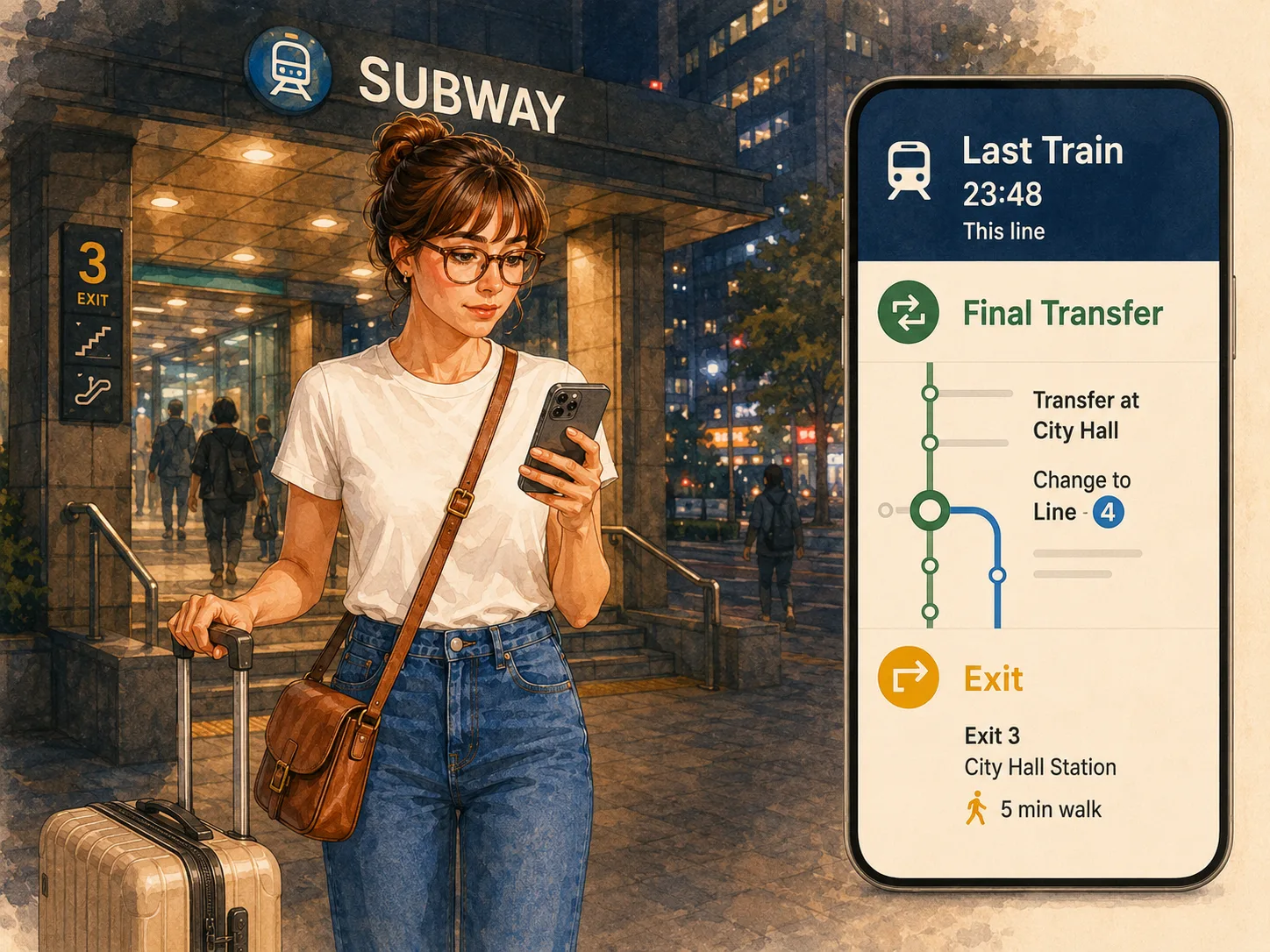
First Check: The Final Transfer, Not Just the Last Train
At first, Maya thought checking the last departure from her starting station would be enough.
But a closer look at the subway route revealed something unexpected. What mattered more was whether trains were still running toward her accommodation and whether she could catch the connecting train at the transfer station.
‘Getting on the last train doesn’t necessarily mean I can make it all the way back.’
It was something Maya had never considered. In a familiar city, she might have known it instinctively. In Seoul, checking these small details in advance made the trip much easier.
After that night, Maya no longer looked only at the arrival time in her map app when traveling late.
Instead, she checked three things first:
Last Train · Final Transfer · Station Exit
Last train · Final transfer · Exit at the destination station
Most Seoul subway service ends around midnight, but last-train times vary by line, station, and whether it is a weekday, Saturday, or public holiday. Maya developed a habit of checking not only her departure station but whether she could complete the entire trip to the station near her accommodation.
If the transfer window was too tight, Maya felt better getting off one stop early and taking a taxi—or choosing another way back from the start—than sprinting through the station.
Maya also discovered that the Seoul Subway app, operated by Seoul Metro, was more useful than expected. It supports English, making it relatively easy for first-time visitors to check routes, last trains, and transfers. That made late-night travel feel far less stressful.

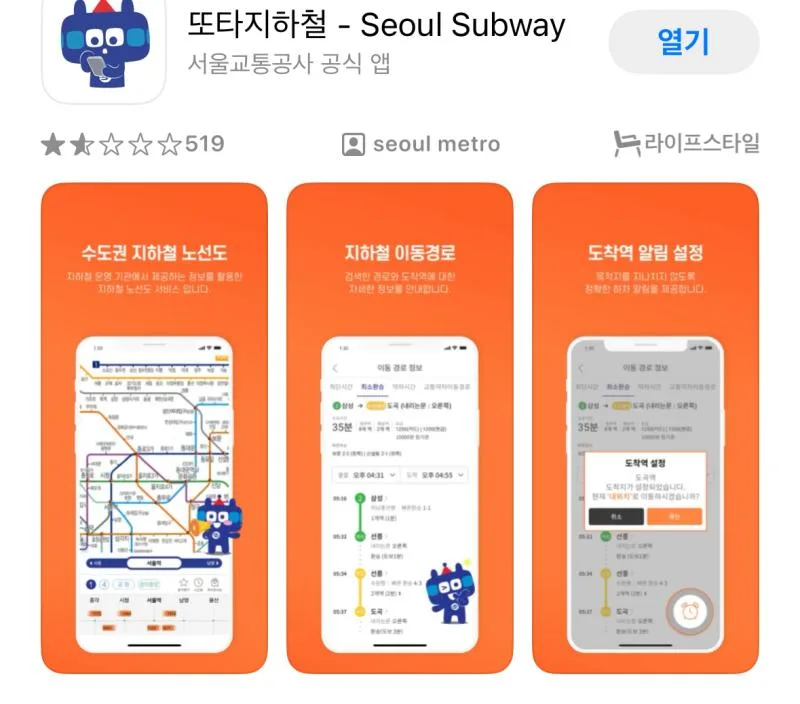
Seoul Subway App
The official subway app from Seoul Metro.
• Search metropolitan subway lines and routes
• View real-time train locations and service information
• Check train crowding levels
• Find station exits, restrooms, elevators, and other facilities
• Receive service disruption alerts
• Report safety concerns or problems on a train
• English support
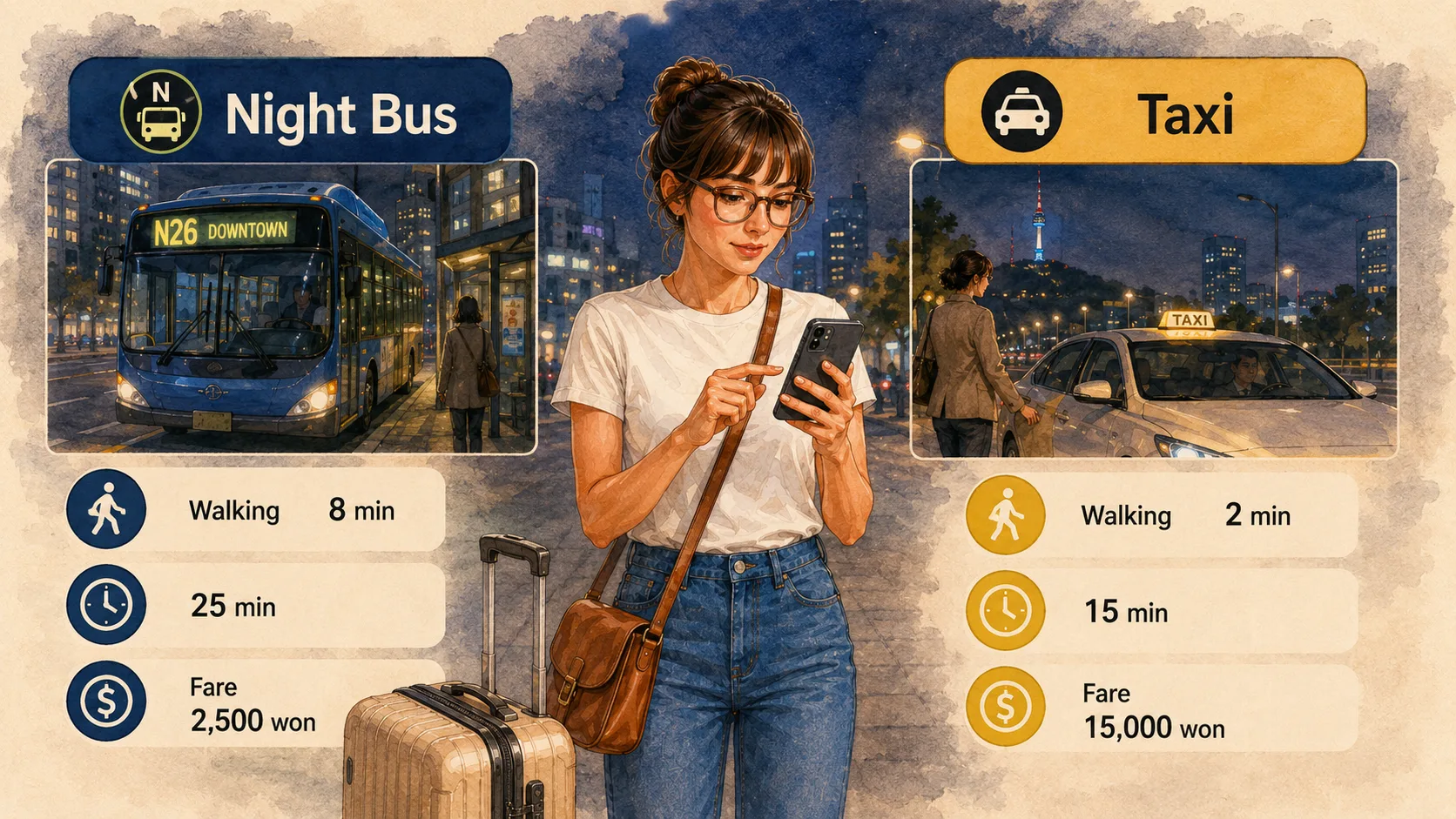
If You Miss the Last Train, Compare Night Buses and Taxis
Maya checked Seoul’s night buses and taxis as a backup in case she missed the last train.
Seoul has late-night buses with route numbers beginning with N. They generally run from around midnight into the early morning.
However, they do not serve every area, so check both the bus stop location and the walking distance from the stop to your accommodation.
A useful service for this is the Seoul Transport Operation & Information Service, TOPIS.
Operated by the Seoul Metropolitan Government, it provides real-time bus locations and arrival information, as well as road congestion and closure updates.
Maya did not compare bus fares alone.
“If I have to walk a long way down a dark street after getting off the bus, a taxi might be the better choice.”
A taxi can take you directly to your accommodation, but late at night it may take longer to get a ride and a nighttime surcharge may apply.
Fares may be especially higher between 11 p.m. and 2 a.m.
Maya compared the bus fare, the remaining walking distance, and the estimated taxi fare together.
Late at night, choosing the option that gets you back safely and comfortably matters more than choosing the cheapest one.


Seoul Transport Operation & Information Service TOPIS — The Seoul Metropolitan Government’s Official Transport Information Website
TOPIS is currently available through its official website. It cannot be installed as an app.
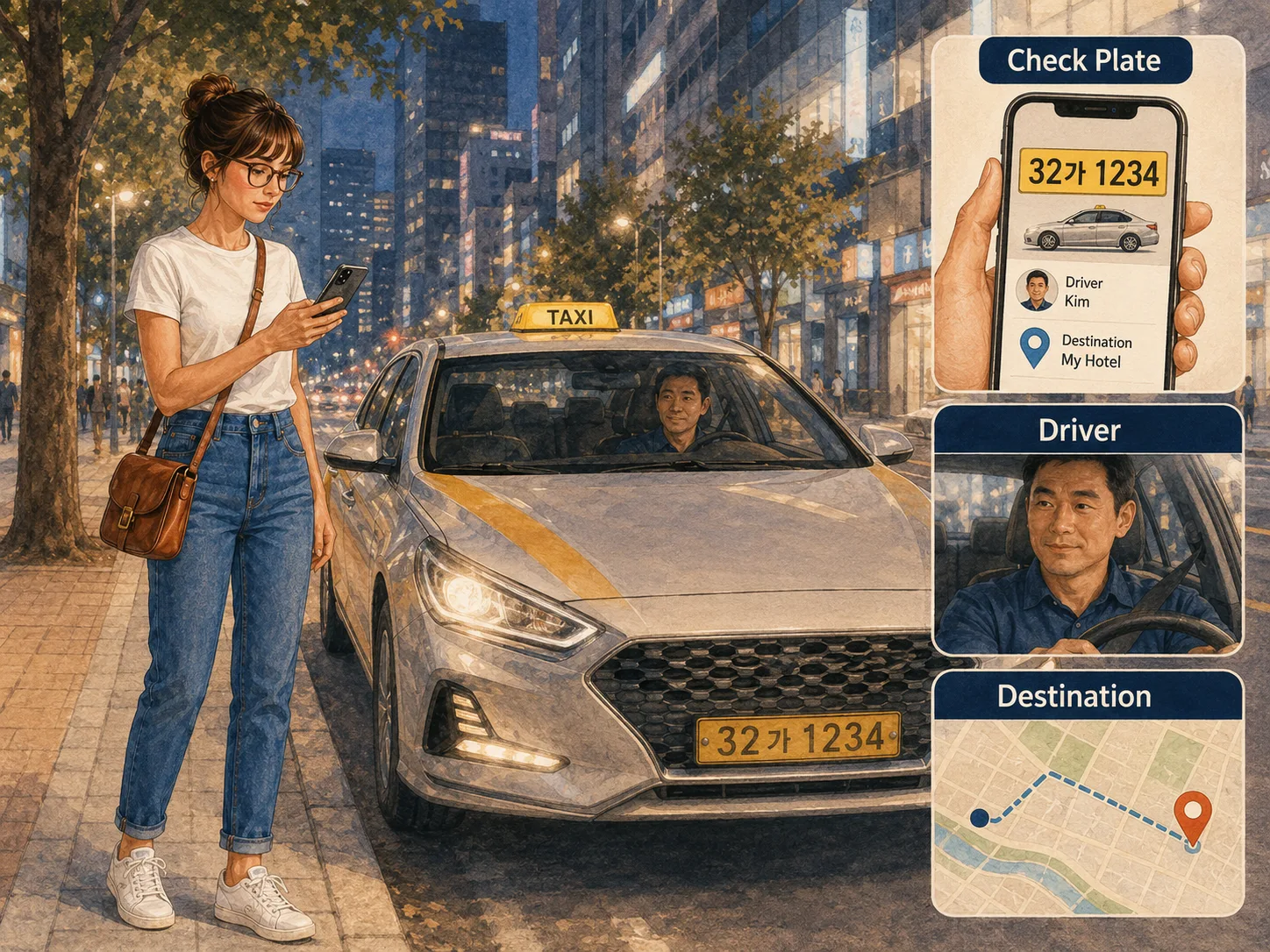
Before Entering a Taxi, Check the Vehicle Number
Maya requested a taxi from a bright main road lined with convenience stores and restaurants, rather than from a quiet alley.
A taxi app lets you check the driver’s name and vehicle number.
When the assigned vehicle arrives, always compare the number shown in the app with the actual license plate before opening the door.
If you hail a taxi on the street, look for the red vacant-taxi indicator in the front windshield.
A ride-hailing app shows the estimated fare in advance and sends your destination to the driver automatically, so you do not need to explain the route at length in Korean.
You can verify the vehicle and driver in the app and follow the route, making the late-night trip back to your accommodation feel safer even in unfamiliar Seoul.
Once inside, check the direction of travel on the map occasionally, but also stay aware of your surroundings instead of staring at your phone the entire time.

Ride-Hailing Apps for Taxis
k.ride
A global taxi-hailing app created by Kakao Mobility for international travelers.
TABA – Get a taxi in Korea
A taxi-hailing app developed for international visitors with support from the Seoul Metropolitan Government.
Other Options
Kakao T, Tada, Uber
Save the Korean Address, Not Just the Accommodation Name
When Maya entered the English name of her accommodation in the map app, several places with similar names appeared.
“If I rely on the name alone, I could end up in the wrong place. I should save the exact address separately.”
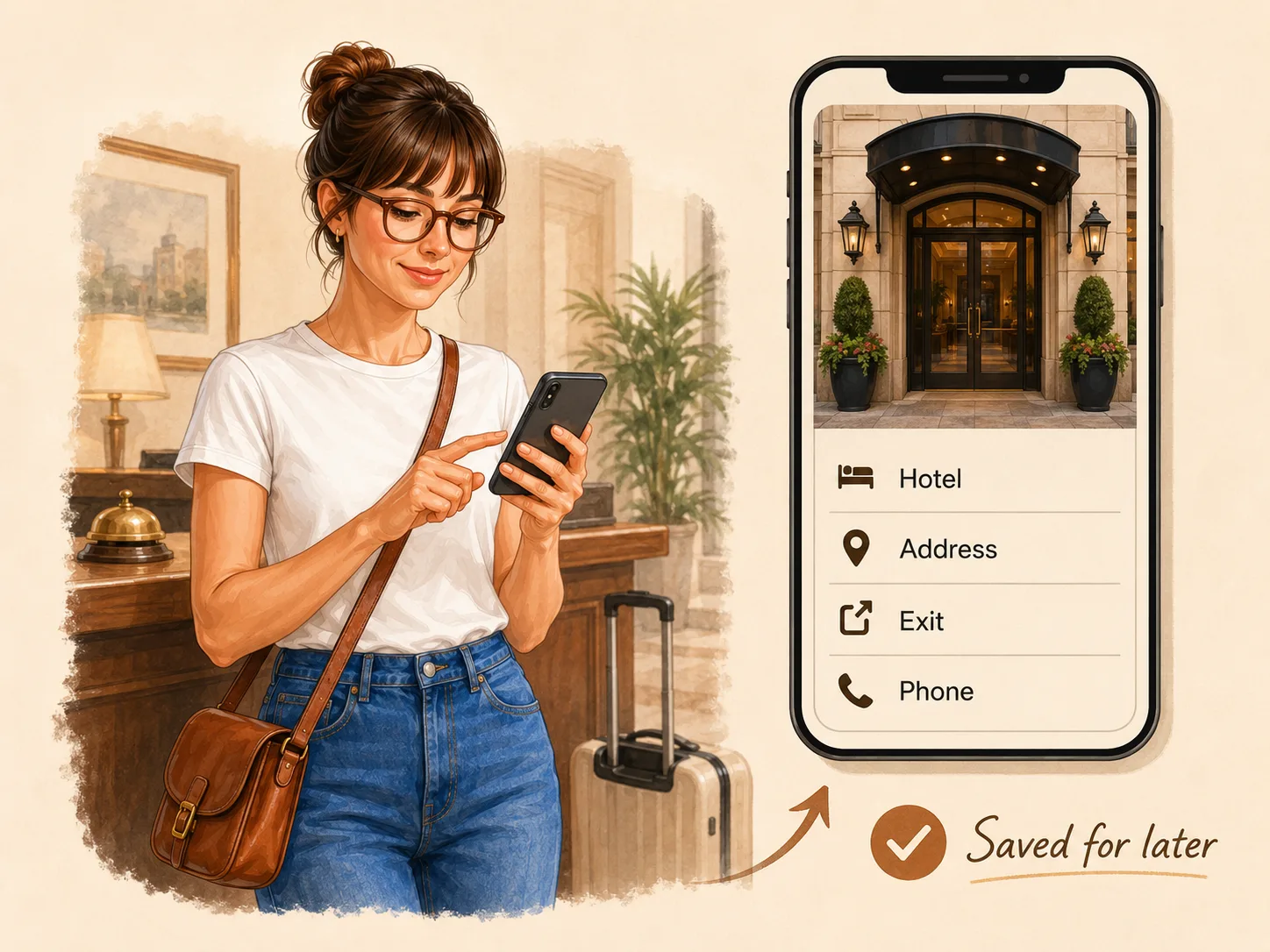
To avoid going to the wrong location, Maya saved the accommodation’s Korean address, phone number, and map location together on one phone screen on check-in day.
• Exact Korean name of the accommodation
• Street address
• Nearest subway station and exit
• Accommodation phone number
• Photo of the building entrance
The Seoul Metropolitan Government also advises preparing the Korean address when explaining a destination to a taxi driver. If you do not know the address, provide a nearby landmark or subway station.
Maya saved a screenshot in her photo library so she could see the address without an internet connection.
She also photographed the accommodation sign and building entrance during the day, which made the place much easier to recognize when she returned at night.
Charge Your Phone Before Going Out at Night
Maya’s phone held her map, translation app, taxi apps, payment methods, and accommodation information.
Even during the day, 20% battery is hardly reassuring. At night, you may need to keep using maps and ride-hailing apps and communicate with the driver, while places to recharge may be harder to find. Check your battery level regularly.
If the battery dies, you may be unable not only to request a taxi, but also to contact the driver or confirm your current location.
Showing your accommodation address or translating directions becomes difficult, and if something goes wrong in an unfamiliar place, you may also lose your way to contact family or emergency services.
Before going out at night, Maya checked the following:
Charge Before Going Out · Carry a Cable · Use Low Power Mode
If you do not have a portable charger, charge your phone briefly at a café or your accommodation before leaving. Lower the screen brightness and limit unnecessary app use.
If your battery is running low, secure your route home and a way to communicate before taking more photos.
Maya stopped thinking of her phone’s battery as a simple convenience. At night, it was essential to getting back safely.

Share Your Location Briefly Just Before Leaving
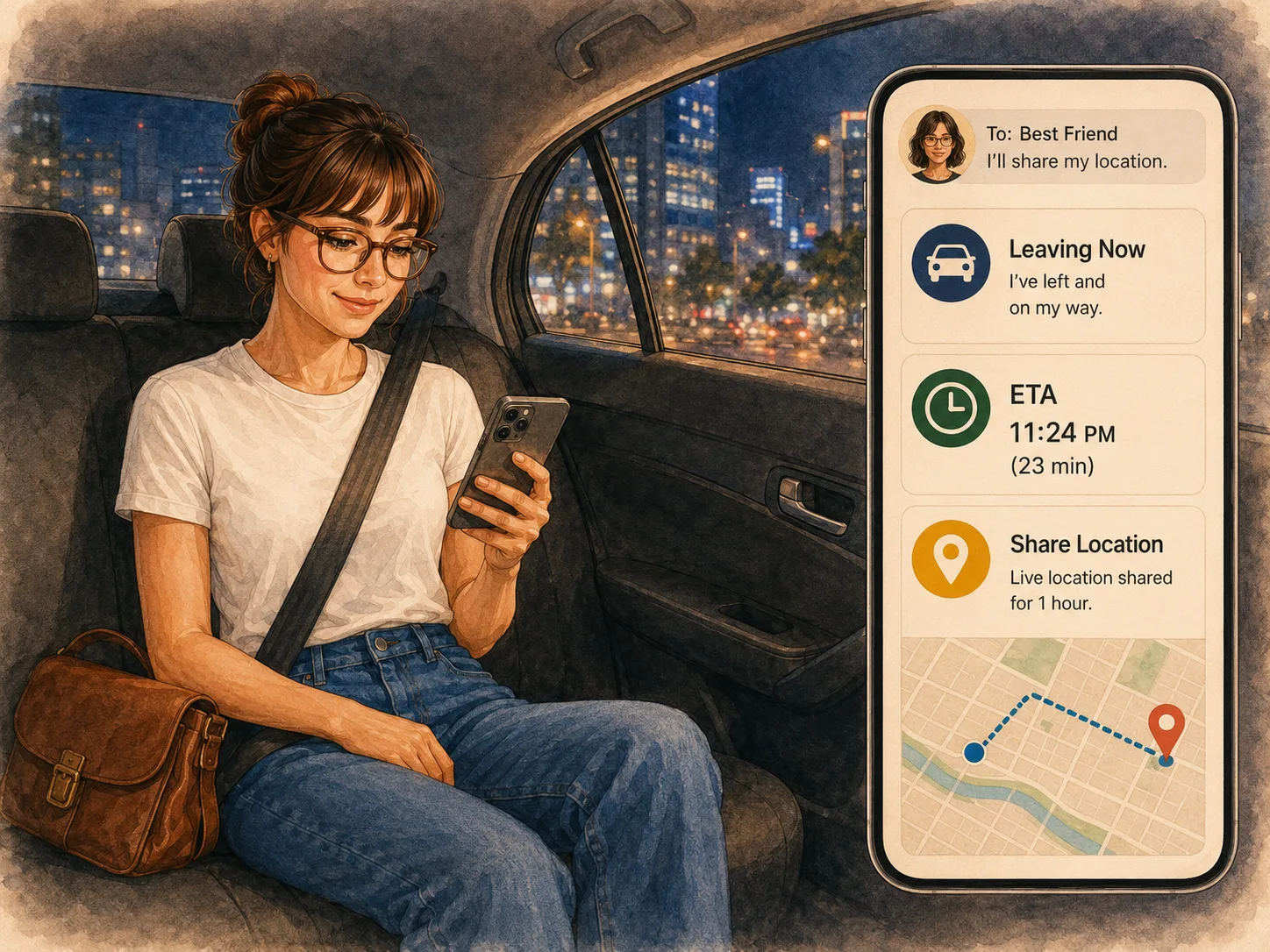
Once inside the taxi, Maya sent a message to a close friend.
“Leaving now. ETA 12:05.”
She shared her live location with the friend only for the duration of her late-night trip.
When starting a late-night trip home, tell someone you trust your current location, how you are traveling, and your estimated arrival time.
If you do not check in by the expected time or your trip is delayed, that person can quickly assess the situation and help.
If you are traveling alone, the person does not have to be someone in Korea.
Tell a family member or friend in a compatible time zone, or a staff member at your accommodation, that you expect to return late.
Share these three details:
Where I Am · How I’m Going · When I’ll Arrive
A Checklist That Ends at Your Accommodation Door
When the taxi arrived, Maya waited until it had stopped completely, checked her surroundings, and then got out.
Before entering the accommodation, she checked her phone, wallet, and bag once more. After locking the door behind her, she sent her friend a short message.
“I’m back.”
Korea has an active nightlife, and many people comfortably go out late. That does not mean being out alone at night is inherently dangerous.
Still, in an unfamiliar city, a missed last train or dead phone battery can make it difficult to find a way home or ask for help.
Maya’s late-night return checklist was simple:
Check the last train and final transfer.
Check the taxi’s license plate.
Save the accommodation’s Korean address.
Keep enough battery in reserve.
Share your location and estimated arrival time when leaving.
Once she had those five things covered, late-night Seoul no longer felt like something to worry about in the abstract. As long as she knew how she was getting back, she could enjoy a night out on her own with greater peace of mind.
Comments 0
Please log in to comment.
No comments yet. Start the conversation.