

A 10,000-Won K-Food Meal from a Korean Convenience Store
Maya, who appears in this article, is a fictional character inspired by an American traveling in Korea.
Rather than presenting Korean convenience-store food as an exaggerated tourist attraction, this article uses Maya’s everyday experience to show how local people normally choose and eat it.
One evening, after spending the day in Seoul and heading back to her accommodation, Maya noticed a brightly lit convenience store on the corner of an alley.
A little farther down the same alley, she found another one. After crossing the main road, she saw the sign of yet another brand.
Maya smiled and thought,
“In Korea, you do not have to go looking for a convenience store. You simply come across one while walking.”
The first store she entered sold far more than drinks and snacks. Cup ramen, triangle gimbap, lunch boxes, gimbap, sandwiches, salads, hot bars, tteokbokki, bread, and cake filled the small space with enough choices to make a full meal.
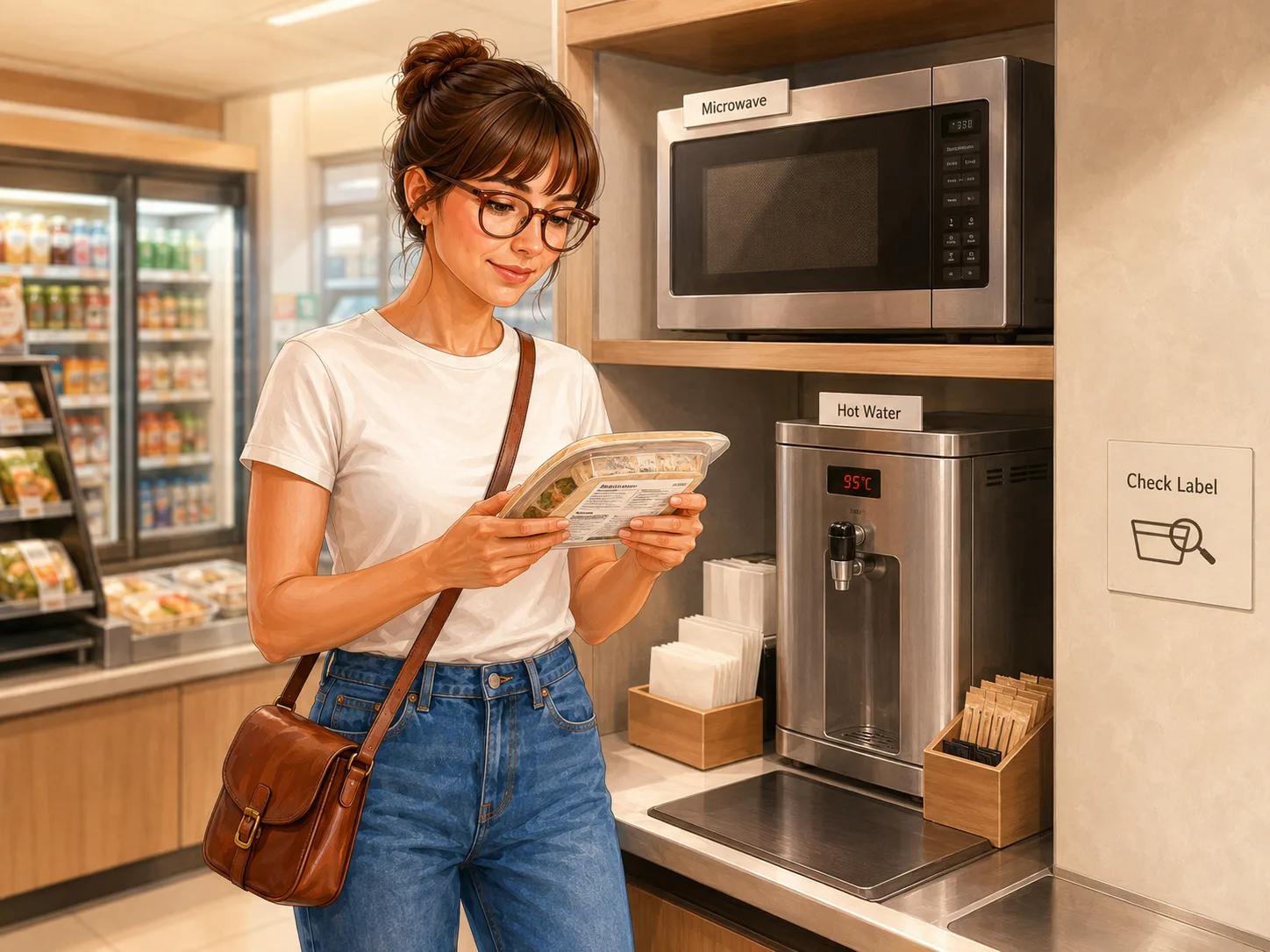
Off to one side were a microwave and a hot-water dispenser, and a small table and chairs stood by the window.
It was not a restaurant, but it seemed perfectly adequate for choosing a simple meal, heating it, and sitting down for a short while to eat.
Maya’s dinner budget that evening was 10,000 won.

Her first choice was cup ramen
Maya spent the longest time in front of the cup-ramen shelves.
There were spicy noodles, mild soup noodles, jjajang noodles, stir-fried noodles, kimchi ramen, and even udon. With so many options, she initially had no idea what to choose.
At Korean convenience stores, cup ramen is often paired with other products to turn it into a more complete meal rather than eaten on its own.
Some of the easiest combinations are:
• Cup Ramen + Triangle Gimbap
• Spicy Ramen + Cheese
• Ramen + Boiled Egg
• Ramen + Sausage or Hot Bar
• Ramen + Kimchi
If spicy food feels a little overwhelming, adding cheese or a boiled egg is a useful option. Their mild flavor softens the heat and makes the ramen easier to enjoy.
Triangle gimbap goes especially well with ramen broth, making it one of the most approachable combinations.
The Seoul Tourism Organization has also introduced simple convenience-store combinations, such as adding cheese to gimbap.
Maya chose one cup of ramen that was not too spicy and a tuna-mayo triangle gimbap.

Triangle gimbap is small but surprisingly filling
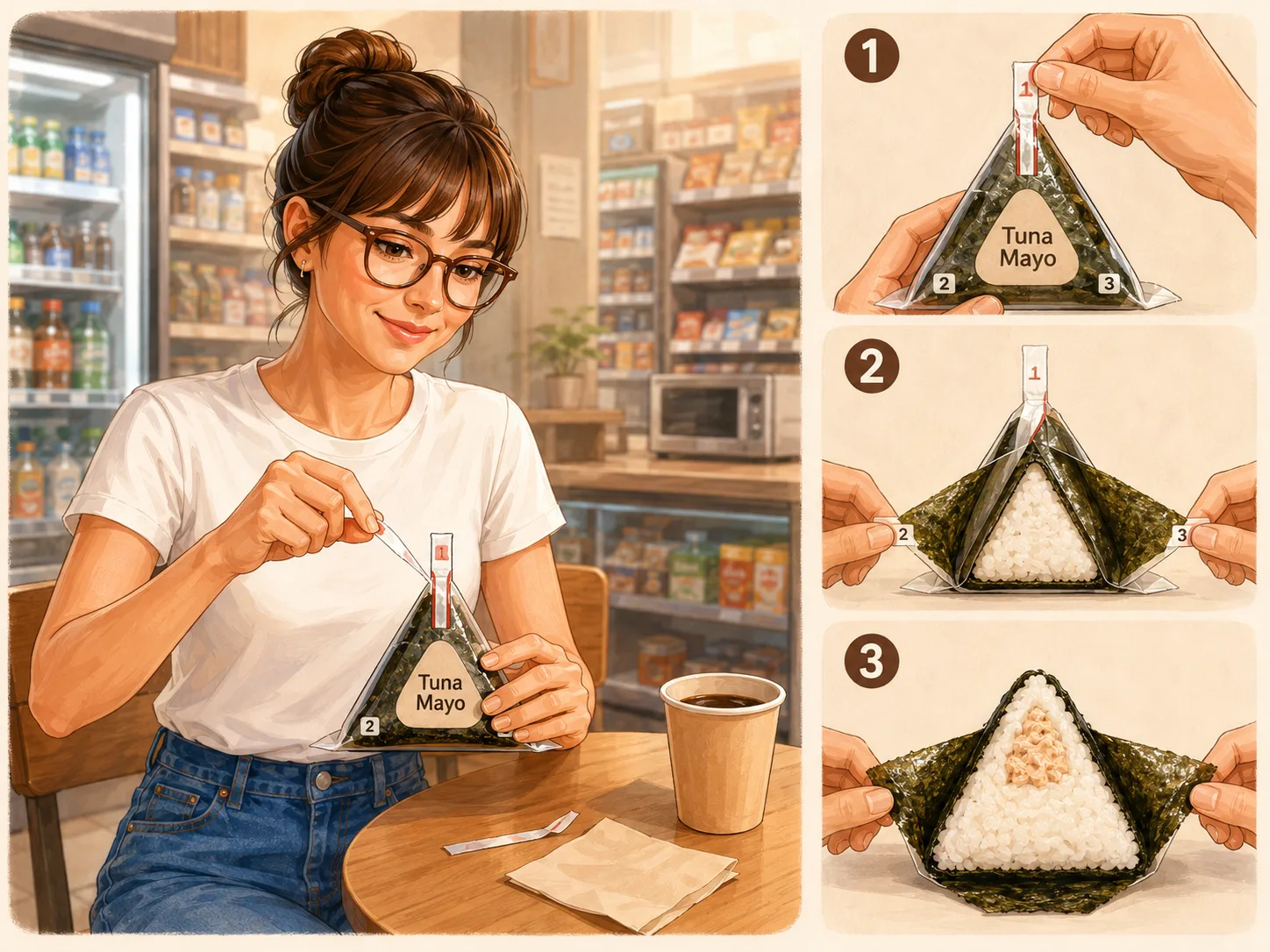
Maya stared for a moment at the numbers 1, 2, and 3 printed on the triangle-gimbap wrapper.
She pulled the center strip downward and then removed the plastic from each side in order, allowing the crisp seaweed to wrap around the rice. It looked a little complicated at first, but after trying it once, it was easy.
Triangle gimbap comes with many fillings, including tuna mayo, bulgogi, Jeonju bibim, stir-fried kimchi, and ham.
Tuna Mayo and Bulgogi are relatively safe choices for a first-timer. Those who enjoy heat can choose stir-fried kimchi or gochujang-based fillings, but a flame icon or the word “spicy” on the package may signal more heat than expected.
Convenience stores have recently continued to release not only standard triangle gimbap but also value products with more filling or several pieces bundled together.
In 2026, some convenience-store chains expanded their ready-meal options with triangle gimbap priced around 1,100 won and gimbap or rice-bowl products in the 2,000-to-3,000-won range.
Choose a lunch box for a more substantial meal
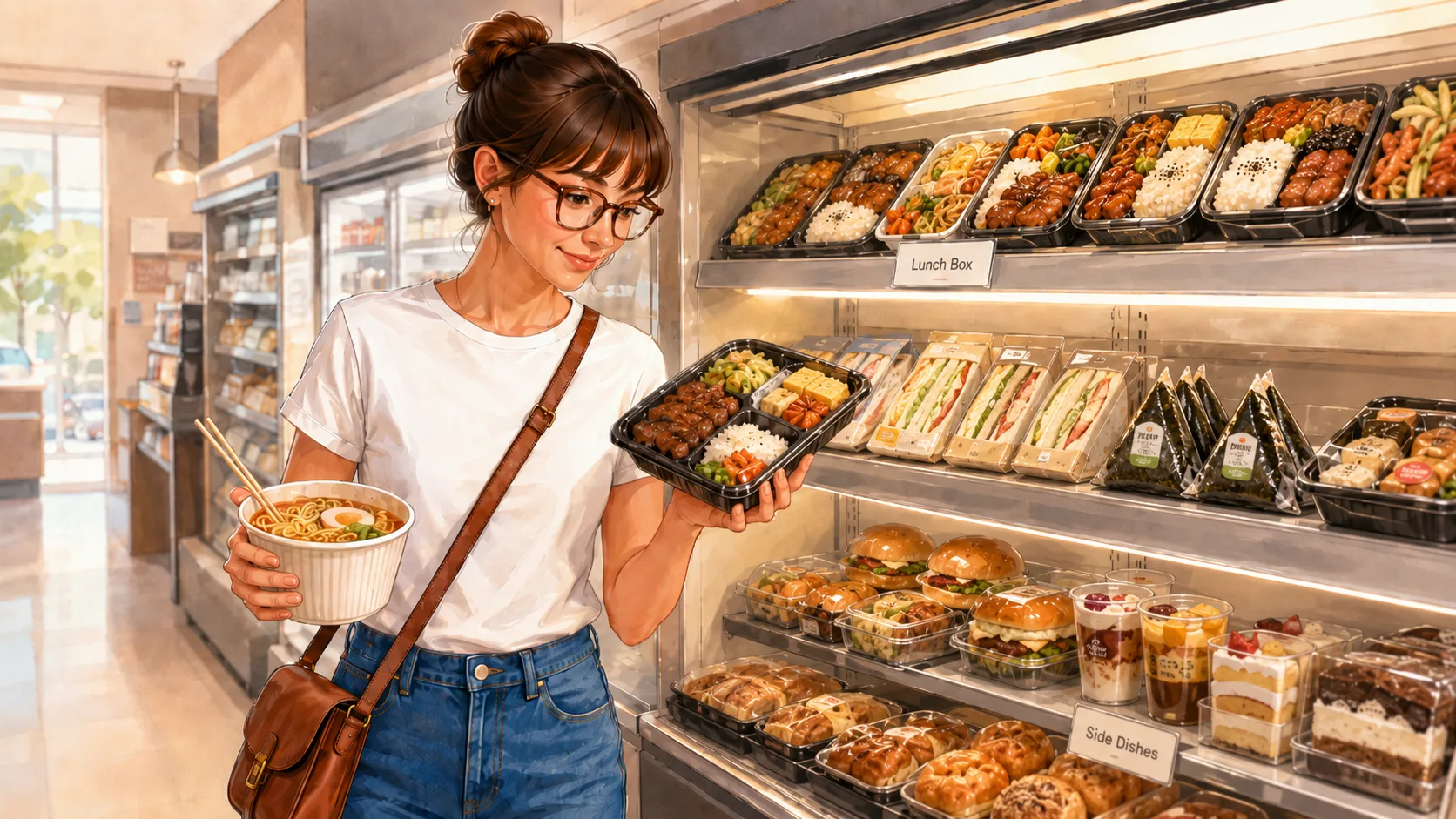
For anyone wanting something more filling than cup ramen, Maya felt that a convenience-store lunch box was another good option.
Standing in front of the refrigerated display, Maya was briefly surprised by the variety. There were rice bowls topped with meat and compartmentalized lunch boxes holding several different side dishes—far more choices than she had expected.
Korean convenience-store lunch boxes commonly include rice along with side dishes such as spicy stir-fried pork, bulgogi, pork cutlet, chicken, rolled omelet, sausage, and stir-fried kimchi.
Maya found it interesting to see rice, meat, and several side dishes arranged so neatly together in one small box.
“There is an entire meal inside this little box,” Maya thought as she stood looking at the display for a long time.
The prices also felt reasonable.
The exact cost depends on the contents, but even after adding a drink or a small dessert to a lunch box, it is usually possible to have a filling meal for around 10,000 won.
Convenience-store chains have recently broadened their selections, offering everything from inexpensive rice bowls to lunch boxes with varied combinations of side dishes.
Maya chose cup ramen that day, but she could not simply walk past the lunch-box section. She photographed a few items she wanted to try next time and thought,
“In Korea, a convenience store is not just a place to buy snacks. It feels like a tiny restaurant where you can put together a thoughtfully prepared meal for one.”

Pay first, then heat your food
After paying, Maya poured hot water into her cup ramen and checked the instructions on the triangle-gimbap package.
At Korean convenience stores, customers generally pay first and then use the microwave or hot-water dispenser provided in the store. Lunch boxes, refrigerated tteokbokki, hot dogs, some gimbap, and other ready-to-eat foods can be heated in the microwave.
However, not every package should be placed in the microwave as it is.
• Check the microwave time printed on the package
• Remove any sauce packets or wrapping marked for separate removal
• Do not put metallic packaging or foil in the microwave
• Follow instructions to open or remove the lid
• Confirm that the package is marked microwave-safe
When she was unsure how to prepare something, Maya could show the product to a staff member and ask, “Microwave?”The staff member would then kindly explain what to do.
Her final choice was a convenience-store dessert
Ramen and triangle gimbap were already enough for dinner, but Maya could not walk past the refrigerated dessert section.
Cream-filled breads, slices of cake, roll cakes, pudding, rice cakes, macarons, and ice cream were displayed like items in a small café showcase.
Maya picked up a milk-cream bun, looked at the price tag, and paused to do the math.
• Cup ramen
• Triangle gimbap
• Sausage
• Cream bun
• Bottled water
The total came to just under 10,000 won. Exact prices vary by product and promotion, but a meal centered on ramen or triangle gimbap can still include a snack and a drink. Standard cup ramen and triangle gimbap often start in the 1,000-won range, although large cups and premium products can cost more.
Maya stopped when she saw a 1+1 sign beside the checkout counter.
Because she was not used to the idea of buying one item and receiving another, it felt less like a small discount and more like another fun part of exploring the store.
Drinks, snacks, ice cream, and many other products carried 1+1 or 2+1 labels. “There is a lot to think about even when choosing just one thing.”
With that thought, Maya slowly checked which products were on promotion.
Promotion items can change every month, so it is helpful to check the convenience-store app or the notices displayed in the store when visiting.

Food trends happen at convenience stores too
Across the shelves, Maya noticed packages that reminded her of cartoon characters, movies, and video games.
Korean convenience stores frequently release limited-edition products not only with new flavors of familiar foods but also through collaborations with popular characters, games, movies, restaurants, chefs, and companies.
In 2026, GS25 released ready meals, popcorn, and gummies themed around the movie Super Mario Galaxy, while other products paired food with unexpected brands, such as an ice cream collaboration with Hyundai Motor Company.
Collaboration products are commonly created in forms such as:
• Bread or desserts featuring popular characters
• Lunch boxes and ramen recreating flavors from well-known restaurants
• Gummies or ice cream inspired by popular drink flavors
• New menus combining trendy foods such as chicken, tteokbokki, and mala
• Products containing limited-edition stickers or cards
These are not standard products that remain on sale indefinitely. Trends move quickly and quantities are limited, so an item seen yesterday may not be available at another store today.
Maya found that interesting too.
The reason to revisit a convenience store could be slightly different each time.


An ordinary meal at a small table
Before the ramen was ready, Maya sat at the small table by the window.
Outside, people were heading home from work. Someone bought coffee and left, while two students talked over cups of ramen.
Maya lifted a mouthful of noodles and took a bite of triangle gimbap. The salty, warm ramen broth paired better than expected with the savory rice, and the simple food still felt like a satisfying meal.
The sausage added more texture and flavor, making the meal even more satisfying, and the soft cream bun she ate last gave the spicy ramen a sweet finish.
Maya was intrigued that just a few foods chosen from a convenience store could offer so many different flavors in one meal.
It was neither an elegant dinner nor a meal from a famous restaurant.
Still, it felt comforting to choose food without much deliberation in an unfamiliar city, heat it immediately, and sit somewhere warm to eat.
Not every convenience store has seating, and depending on its size and location, the eating area may be very small or nonexistent. When seating is available, customers should finish eating inside and dispose of containers and trash according to the store’s instructions.
Maya put the remaining bottled water in her bag and thought as she walked back to her accommodation,
A Korean convenience store felt less like a small supermarket and more like an everyday space where anyone could pause and put together a meal almost anywhere in the neighborhood.
Maya’s 10,000-won meal
A first visit does not have to feel complicated.
“One ramen + one triangle gimbap + one protein snack + one small dessert or drink” That is enough to experience several features of a Korean convenience store in a single meal.
For something more filling, replace the ramen with a lunch box. For a lighter option, choose triangle gimbap with a salad and a fruit cup.
The fun of Korean convenience-store food is not ordering a fixed set, but building the meal you want within a limited budget.
For Maya, her first convenience-store dinner was more than a cheap meal.
It was new and varied without being difficult, and special while still offering a glimpse of ordinary life in Korea. That everyday experience felt both fascinating and enjoyable to Maya.
Comments 0
Please log in to comment.
No comments yet. Start the conversation.