

Do You Need to Tip in Korea? A Different Way of Showing Appreciation
Maya, the main character in this article, is fictional and was inspired by an American traveler visiting Korea.
Maya is a white woman in her late twenties who loves fashion. She wears her short brown hair pulled back neatly, with bangs and glasses.
She usually prefers comfortable outfits such as a basic T-shirt, jeans, sneakers, and a crossbody bag.
After dinner at a small restaurant in Seoul, Maya hesitated for a moment at the register.
The staff member had walked her through the menu and even brought her an extra mild side dish in place of a spicy one.
Back home in the United States, this would have been the moment when she wondered how much to leave as a tip after paying.
As Maya took a bill from her wallet, her Korean friend said:
“You don’t have to tip here. You can just say thank you.”
That explanation was a little unfamiliar to Maya.
Feeling grateful does not always mean paying extra. In Korea, appreciation and money are not necessarily tied together.
Tipping is generally not expected in Korea.
Seoul’s official visitor information also notes that service workers do not expect tips. Some large hotels and upscale restaurants may already include a service charge instead.

At Restaurants, Say “잘 먹었습니다” Rather Than Leaving a Tip
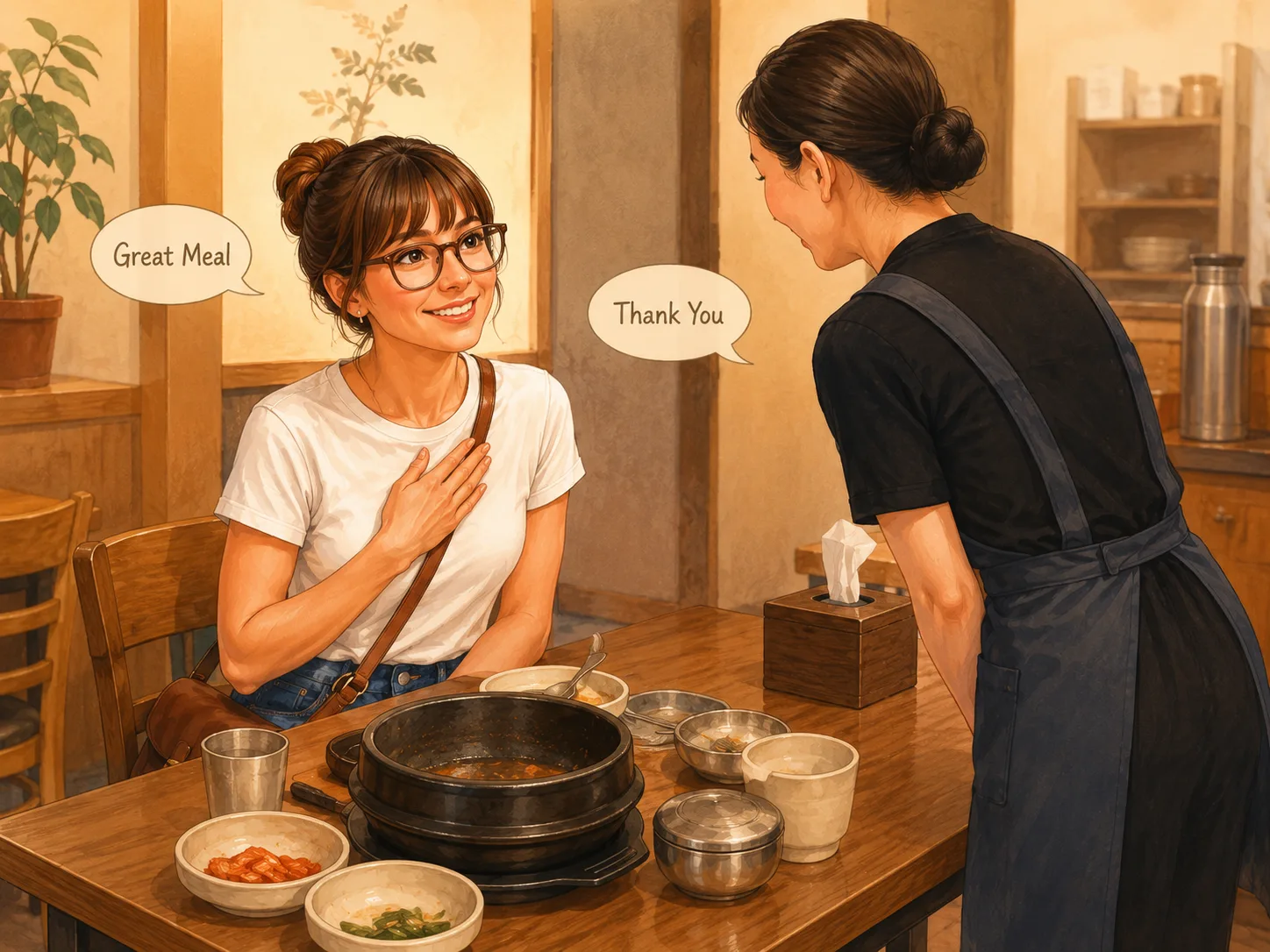
After finishing her meal, Maya put the cash back in her wallet and said to the staff member:
“잘 먹었습니다.”
Jal meo-geot-seum-ni-da.
I enjoyed the meal.
At most restaurants in Korea, there is no need to add a tip to the bill or leave cash on the table.
Some people may accept a tip graciously, but others may be caught off guard by the unfamiliar gesture and return it.
If a staff member was especially helpful, you can say:
• “It was really delicious.”
• “Thank you for explaining everything so kindly.”
• “I really enjoyed the meal.”
Leaving a detailed review later on a map app or booking platform is another thoughtful way to say thank you. Even one sentence about what you appreciated can get the message across.
However, an upscale restaurant or hotel restaurant may include a service charge on the bill, so check the “Service Charge” line on the receipt first.
Standard Hotel Service Does Not Require a Tip Either
The next day, a hotel employee carried Maya’s heavy suitcase to the door of her room.
Maya wondered again whether she should open her wallet, but tips are not generally expected for standard hotel service in Korea.
If you have paid the room rate or a separately listed service charge, you do not have to hand over additional cash.
When in doubt, the standard approach in Korea is simply not to tip.
Maya smiled at the employee and said:
“Thank you. That was a big help.”
If an employee goes out of their way to help—by resolving a booking problem or finding a lost item, for example—you can mention them by name and compliment them at the front desk, or describe what they did in your review after the stay.
If you would still like to offer cash, it is more natural to ask first whether they can accept it.
“Is it okay if I give you a tip?”
If the person declines, simply thank them warmly instead of offering again.

In a Taxi, Pay Only the Fare Shown on the Meter or App
Late one evening, Maya took a taxi back to her accommodation.
When the driver lifted her heavy bag out of the trunk, Maya wanted to leave a tip. But in a regular Korean taxi, you only need to pay the fare shown on the meter or ride-hailing app.
The Korea Tourism Organization’s taxi guidance also explains that most taxis charge according to the meter and do not request tips.
After paying by card, Maya said:
“Thank you. Take care.”
When paying in cash, you may choose not to take a small amount of change, but this is not required either.
If you want to thank the driver, it is enough to avoid slamming the door, check that you have not left anything behind, and say goodbye politely.
If the fare seems wrong or the driver does not use the meter, the issue may be an improper charge rather than a matter of tipping. The Seoul Metropolitan Government explains that foreign travelers can report overcharging and similar problems through the QR system inside taxis.

For Tours, Check What “Free” Actually Means
Tours were the most confusing part for Maya.
“I already paid for the tour. Do I still need to tip the guide separately?”
For a standard group or private tour that you have already paid for, an additional tip is not normally required unless stated otherwise. Check the booking page to see what the price includes and whether there are any extra charges on-site. Afterward, you can thank the guide in person or leave a review.
Some programs are officially offered at no charge, such as the Seoul Guided Walking Tour operated by the Seoul Metropolitan Government. These public tourism programs and private companies’ “Free Walking Tours” may operate differently.
Some free walking tours offered on private platforms do not charge at the time of booking. Instead, participants decide how much to pay after the tour based on their satisfaction, using a Pay What You Want or tip-based model. In this case, the money given at the end is closer to the guide’s actual compensation than a simple bonus.
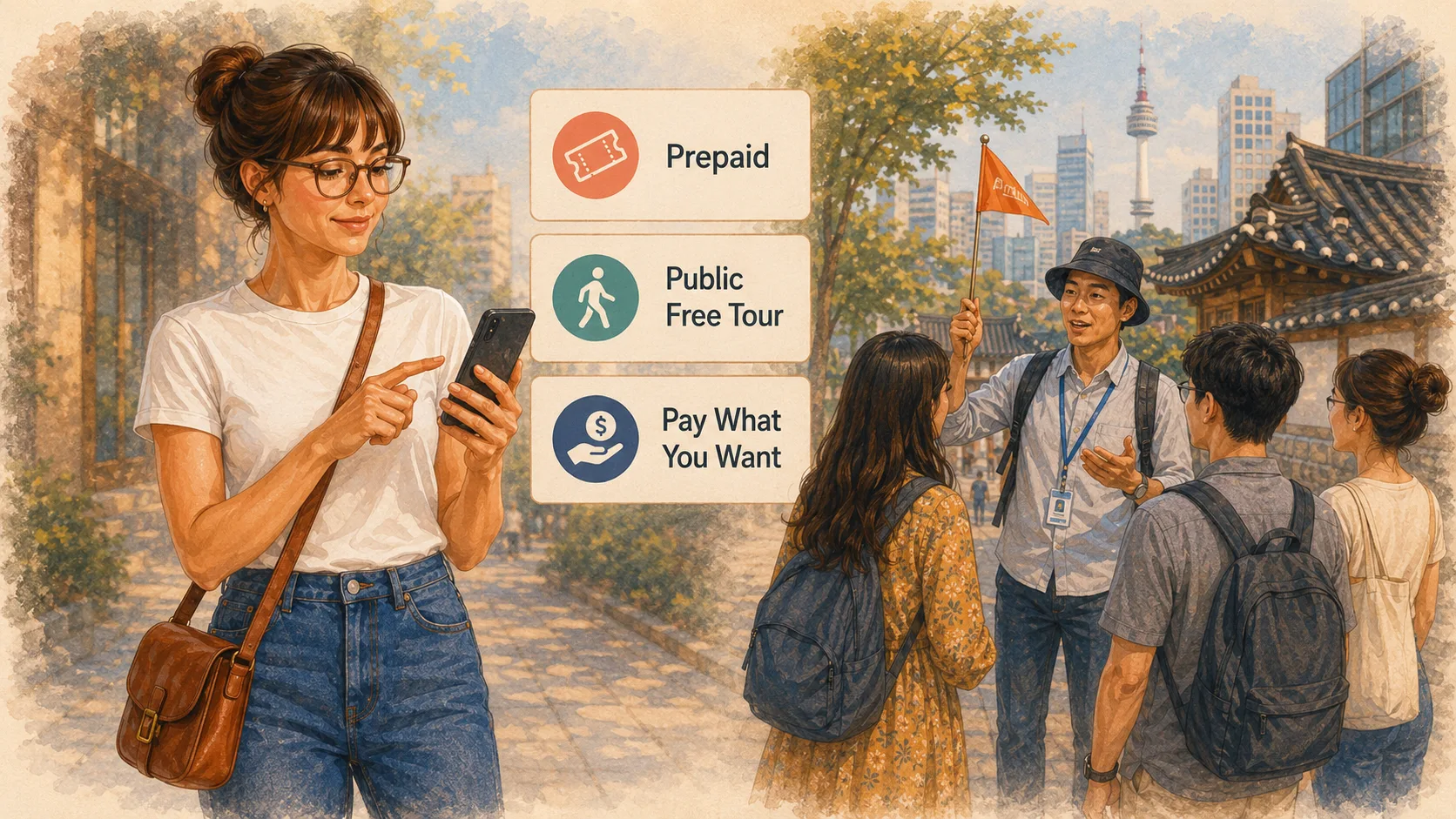
Before booking a tour, Maya decided to look for three terms:
Prepaid Tour
A tour you have already paid for
Free Public Tour
A free program run by a city or public institution
Pay What You Want
A tour where you decide what to pay afterward based on your experience
Knowing the difference among these three types can help you avoid awkward surprises about tipping once you arrive.
In Korea, Gratitude Is Often Expressed in Specific Words
The fact that people do not usually tip in Korea does not mean that gratitude for good service is unimportant.
It is simply expressed differently.
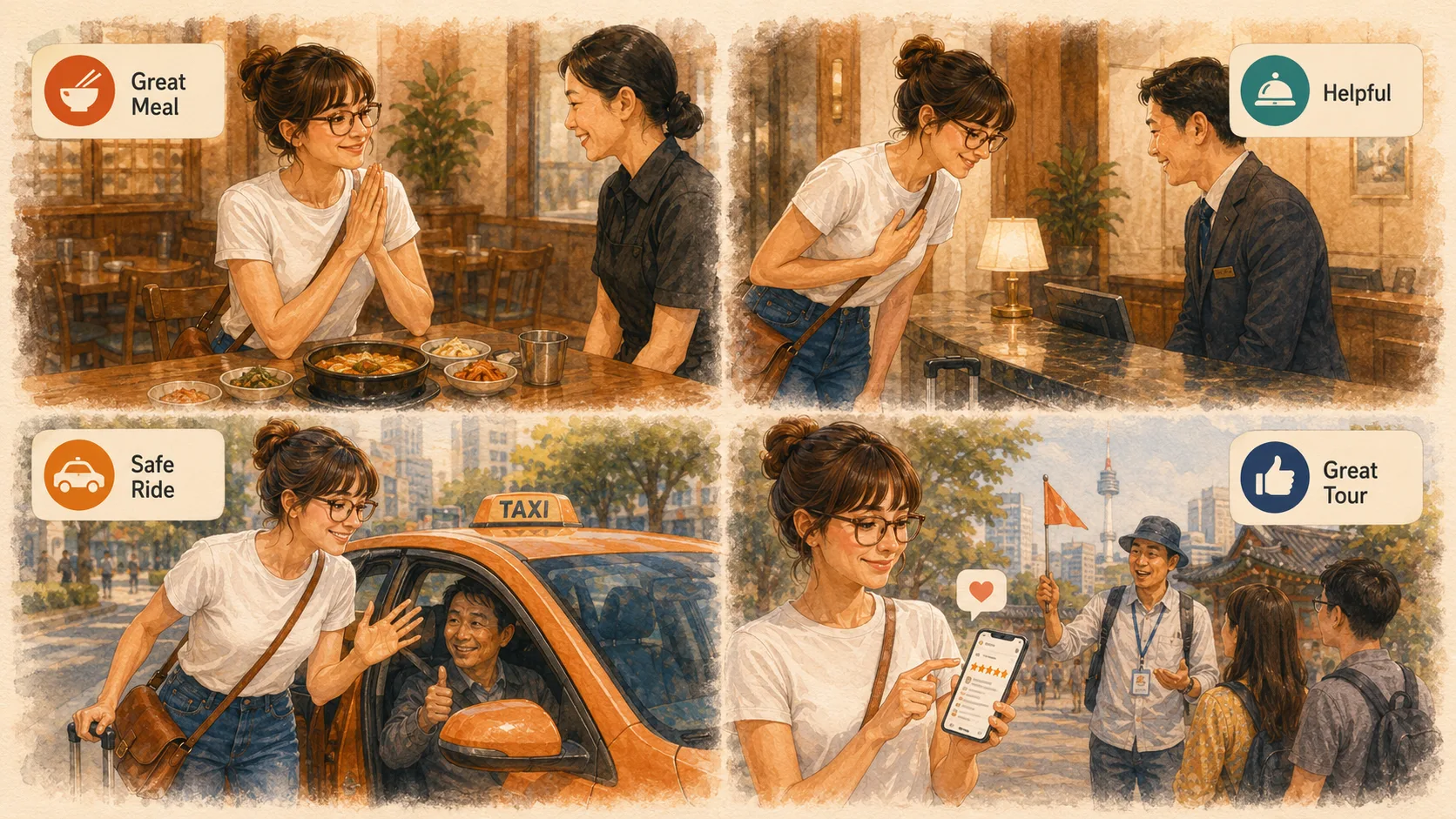
At a restaurant: “잘 먹었습니다.”
At a hotel: “Thank you for your help.”
In a taxi: “Thank you. That was a comfortable ride.”
On a tour: “Your explanation was really easy to understand.”
A simple “Thank you” works too, but briefly saying what you appreciated makes your gratitude clearer.
Rather than measuring gratitude in money, Maya gradually became comfortable looking people in the eye, smiling, and thanking them.
What Maya Learned About Different Ways of Showing Appreciation
On the final day of her trip, Maya received her drink at a café and said to the staff member:
“Thank you.”
She did not leave any money beyond the amount she had paid.
At first, Maya worried that not tipping made her seem ungrateful. By now, she no longer felt that way.
In Korea, paying the listed price and showing appreciation do not have to be part of the same gesture.
For everyday services without special instructions, she did not need to tip. She could show her appreciation through her words and attitude, by leaving a review, or by returning another time.
Maya’s rule of thumb was simple:
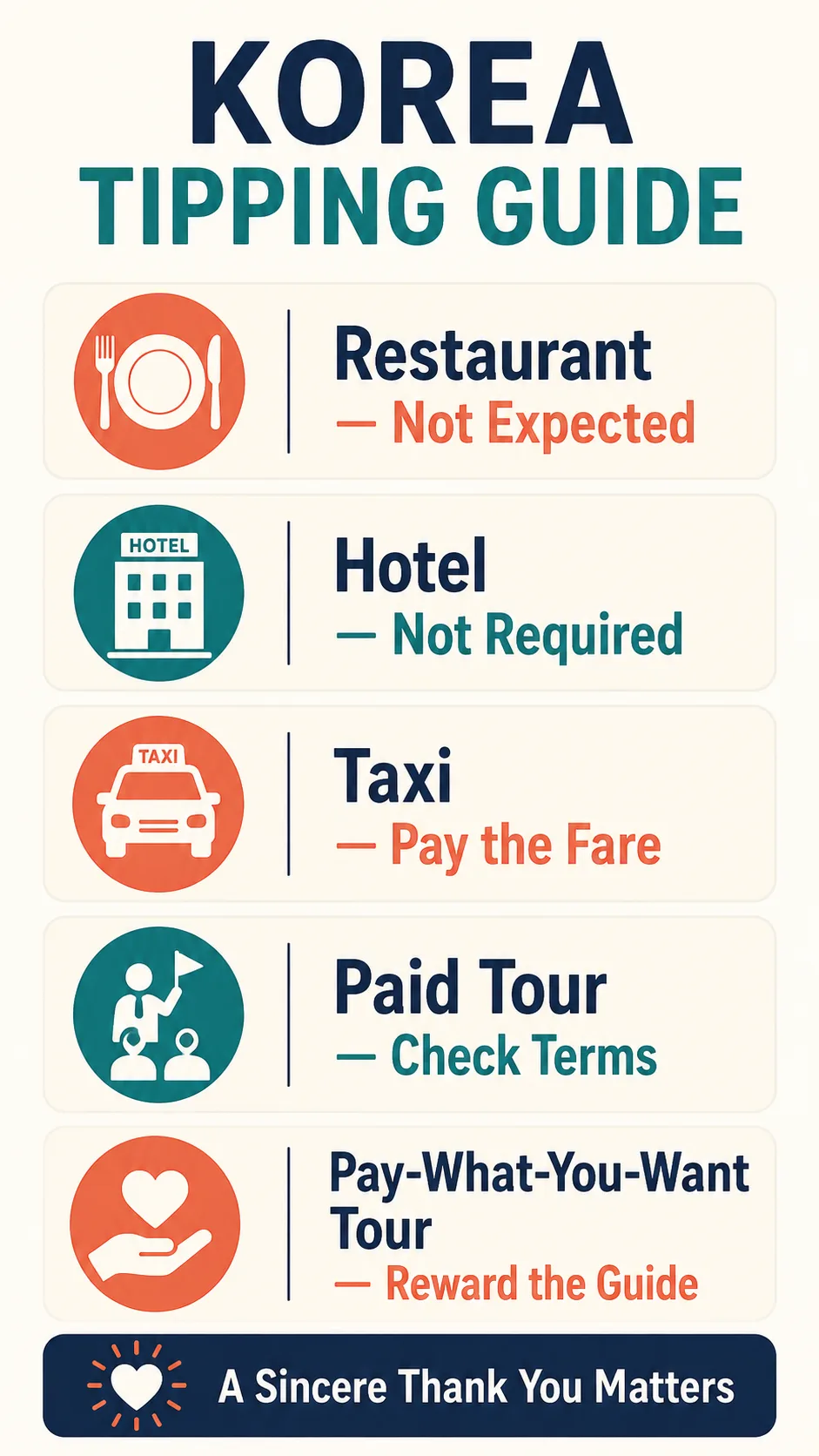
You generally do not need to tip at restaurants, hotels, or in taxis.
If a service charge is listed, check the receipt.
For tours, read the booking conditions and operating model first.
Express gratitude with specific words and a considerate attitude.
What stayed with Maya most was not how to tip in Korea, but something else:
Gratitude may feel the same, but every culture has its own way of showing it.
Comments 0
Please log in to comment.
No comments yet. Start the conversation.