

A Guide to Korean Dermatology Consultations for Different Skin Tones
Maya, the main character in this article, is a fictional character inspired by an American visiting Korea.
This article is not intended to encourage dermatological procedures in Korea. Instead, it is an informational guide that offers a realistic, easy-to-understand look at how people with a range of skin tones can approach a dermatology consultation in Korea.
After spending a few days in Seoul, Maya began noticing K-beauty stores and dermatology clinic signs everywhere.
Skin care is discussed so casually in Korea that it can feel like part of everyday life, but Maya had a slightly different concern.
“Do dermatology clinics in Korea have enough experience with a wide range of skin tones?”
“My skin tends to develop dark marks after irritation. Will that be addressed properly during the consultation?”
What mattered to Maya was not which treatment happened to be famous.
She cared more about using the consultation to understand her skin and determine what kind of care she actually needed.

Different skin tones can require different starting points in a consultation
While living in the United States, Maya was used to skin tone being discussed quite naturally during dermatology consultations.
But in Korea, explanations are still often based primarily on East Asian skin types, so people with other skin tones may receive a more accurate consultation if they explain their own skin history and concerns first.
For example, some people remain red for a long time after irritation, while others are more likely to be left with dark marks—hyperpigmentation—rather than lingering redness.
Some people may also scar easily even after a small injury or have a tendency to form keloids.
A good dermatology consultation, then, is not simply about judging the skin by appearance. It is a process of working together to understand the skin’s condition and what kind of care it may need.

The reality of dermatology in Korea: becoming more inclusive, but experience varies by clinic
Overall, the dermatology clinics Maya looked into in Korea were relatively easy to access.
Appointments were often convenient to arrange, and many clinics had a structured flow from consultation to treatment.
More clinics are also beginning to see international patients.
But one point remained important.
Not every clinic has the same level of experience or understanding when it comes to different skin characteristics and skin tones.
It is therefore important to choose a clinic with substantial experience treating international patients and the ability to explain concerns such as post-inflammatory hyperpigmentation (PIH) after laser treatment in a way that reflects each patient’s skin characteristics.
Otherwise, the consultation may remain fairly general, and the patient may need to ask directly about the issues that matter most.
In other words, when thinking about dermatology in Korea, it is more realistic to focus less on the fact that “Korea has many dermatology clinics” and more on the fact that “the level of experience and explanation differs from one clinic to another.”
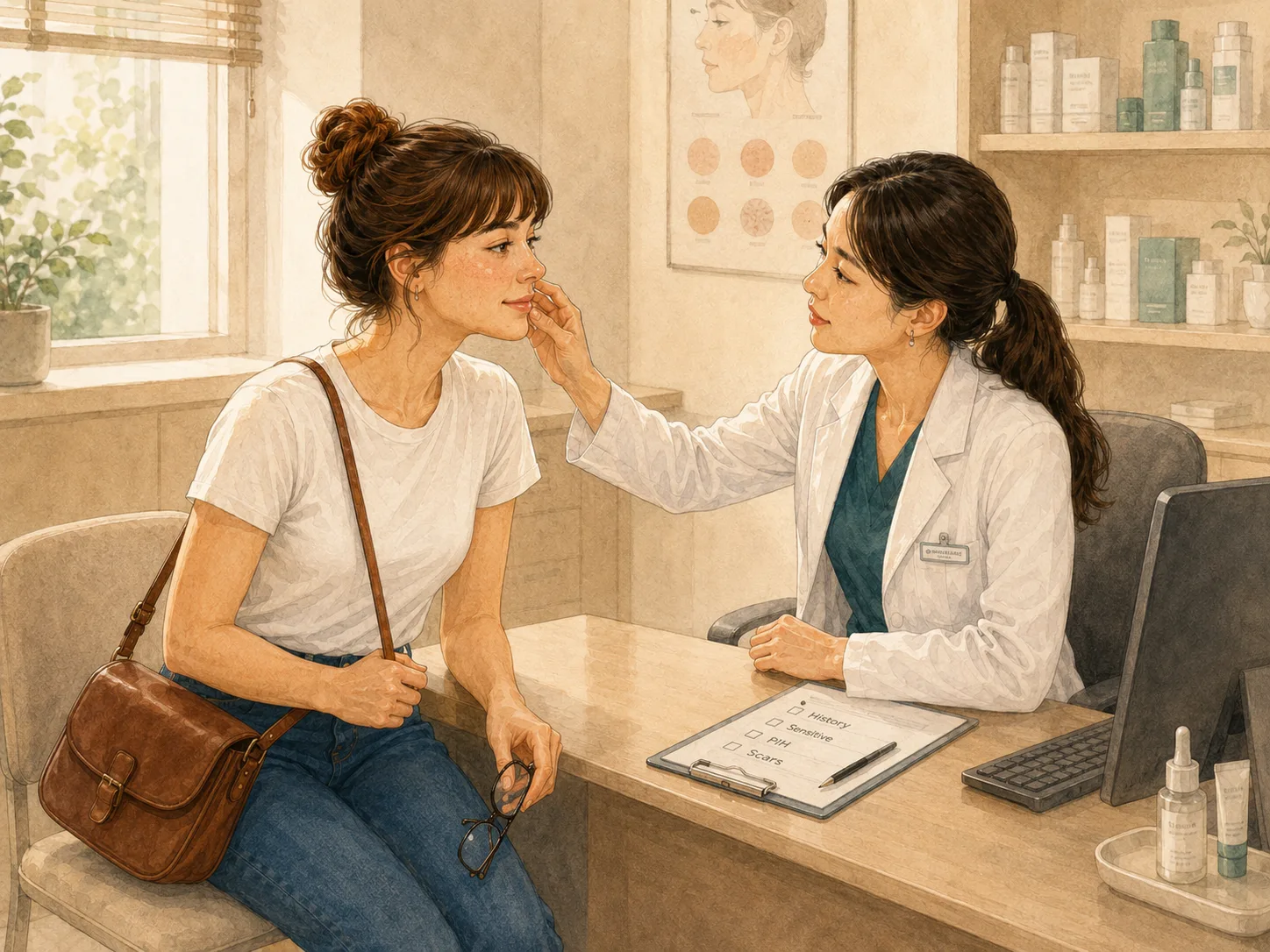
What mattered most to Maya: the risk of hyperpigmentation
Maya’s skin did not usually react severely, but acne marks and dark spots after irritation tended to linger.
So the first thing she wanted to ask about during a dermatology consultation in Korea was the risk of hyperpigmentation.
This can be especially important in situations such as the following:
• Treatment for acne marks
• Laser treatment for spots, melasma, or overall tone
• Chemical peels
• Regenerative treatments that involve irritation
• Treatment while the skin barrier is weakened
For people with deeper skin tones or a natural tendency toward hyperpigmentation, dark marks that remain after a procedure may be a greater concern than temporary redness.
That is why Maya felt it was more important to ask how her skin might react than to begin by asking how effective a treatment would be.


Questions to ask before a procedure
Maya had heard that dermatology consultations in Korea can move quickly,
so she decided it was important to prepare her questions in advance.
To receive a consultation that takes skin tone and individual skin characteristics into account, it can help to ask the following questions before a procedure.
• Do you have experience treating different skin tones?
• Am I prone to hyperpigmentation after this treatment?
• What side effects are most common for my skin type?
• Would you recommend a patch test first?
• How much downtime should I expect?
• What should I avoid after treatment?
These are not overly demanding questions. They are basic questions meant to confirm whether a procedure is appropriate for your skin.
The important thing in a Korean dermatology consultation is not to choose a “popular treatment” as quickly as possible, but to understand clearly whether it suits your skin, what the risks are, and what recovery will involve.
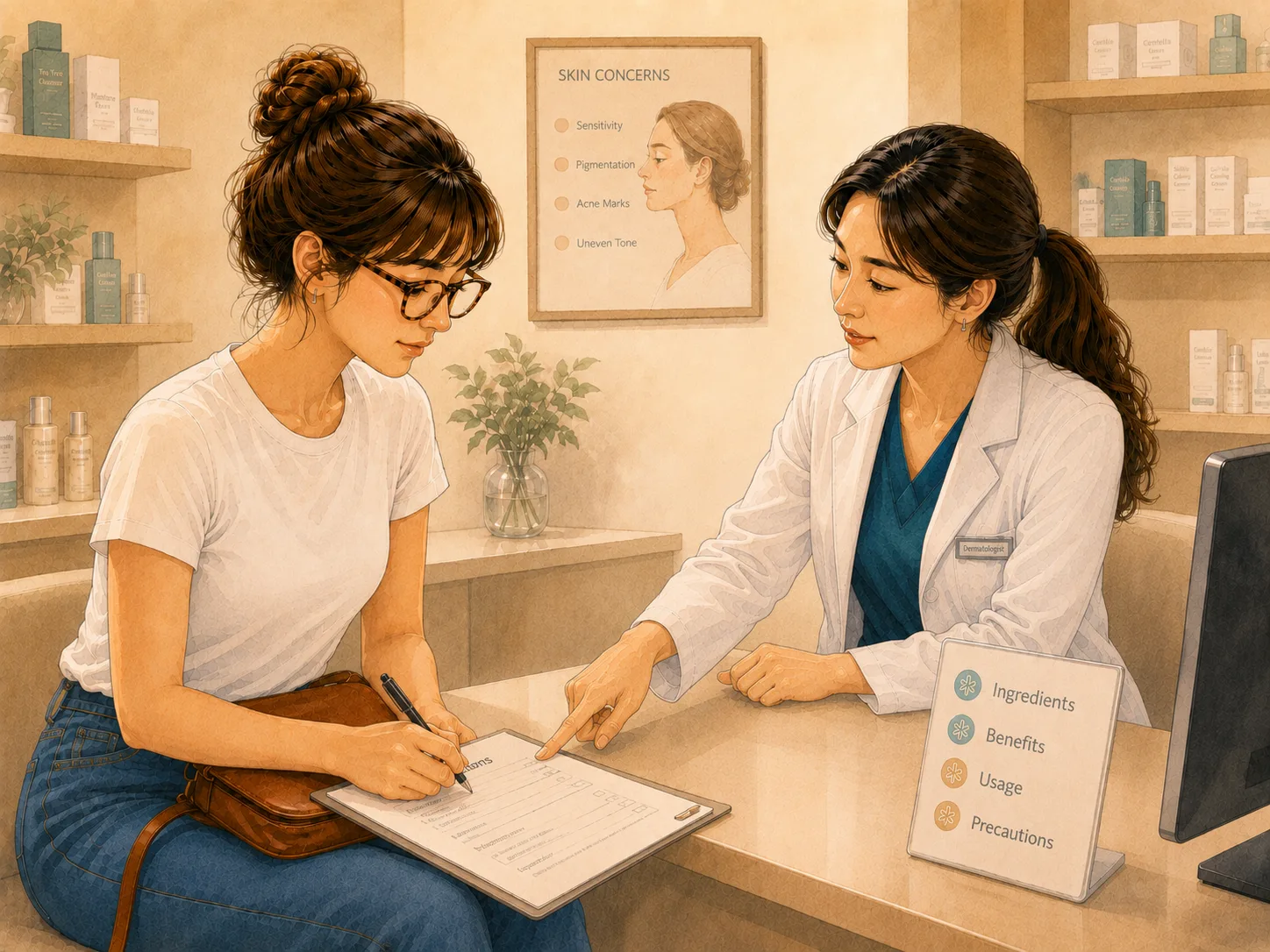

How to get more from a dermatology consultation in Korea
After visiting a clinic, Maya came away with one important standard for evaluating a dermatology consultation in Korea.
Rather than quickly recommending a procedure, does the clinic explain my skin’s current condition and the reactions I might expect?
This is an important standard.
In an environment with so many dermatology clinics and so much information about procedures, patients have even more reason to slow down, ask questions, and listen carefully.
Korea’s dermatology system is clearly specialized and generally accessible.
But the quality of consultation can vary by clinic, and the most reliable way to assess experience with different skin tones is to ask about it directly.
So the main point of this article is simple: during a consultation, it is important to explain your skin characteristics and previous treatment experiences in enough detail.

Conclusion
Maya summed up the experience this way.
“A good dermatology consultation is not a time to be recommended whatever treatment is trending. It is a time to work together and find out which options truly suit my skin.”
A dermatology consultation in Korea can still be helpful for people with different skin tones and skin characteristics.
What matters, however, is not simply copying the treatments that many other people receive.
It is more important to explain your skin characteristics, previous treatment history, and specific concerns, and to ask in advance about the possibility of hyperpigmentation or other side effects.
Only then did Maya begin to see Korean dermatology clinics a little differently.
She had learned that a good consultation is not about deciding on a procedure quickly, but about working together to find an approach that fits her skin.
Comments 0
Please log in to comment.
No comments yet. Start the conversation.