

Who Should You Call in Korea: 112, 119, or 1330?
Maya, who appears in this article, is a fictional character inspired by an American traveler visiting Korea.
In a real emergency, always follow on-site guidance and the instructions of emergency-service operators over the information in this article.
While waiting for the subway at Seoul Station, Maya casually reached for her shoulder and realized her small bag was gone.
Her heart dropped.
Had she left it at the café she had just visited, or lost it somewhere along the way? She hurriedly retraced her route in her mind, but could not decide where to start looking.
Three Korean emergency numbers were saved in her phone. She had stored them before traveling to Korea, just in case.
112, 119, 1330.
But when an unexpected problem actually occurred, knowing the numbers and knowing which one to call turned out to be two very different things.
‘Who should I contact first about a missing bag—the police or tourist assistance?’
After a few confused moments, Maya accepted help from someone nearby and calmly sorted out the situation. Along the way, she naturally learned that each number serves a different purpose.
From that day on, Maya decided to remember the three numbers this way:
Crime is 112. Emergency is 119. Travel help is 1330.

112 — Police for Crime or Immediate Danger
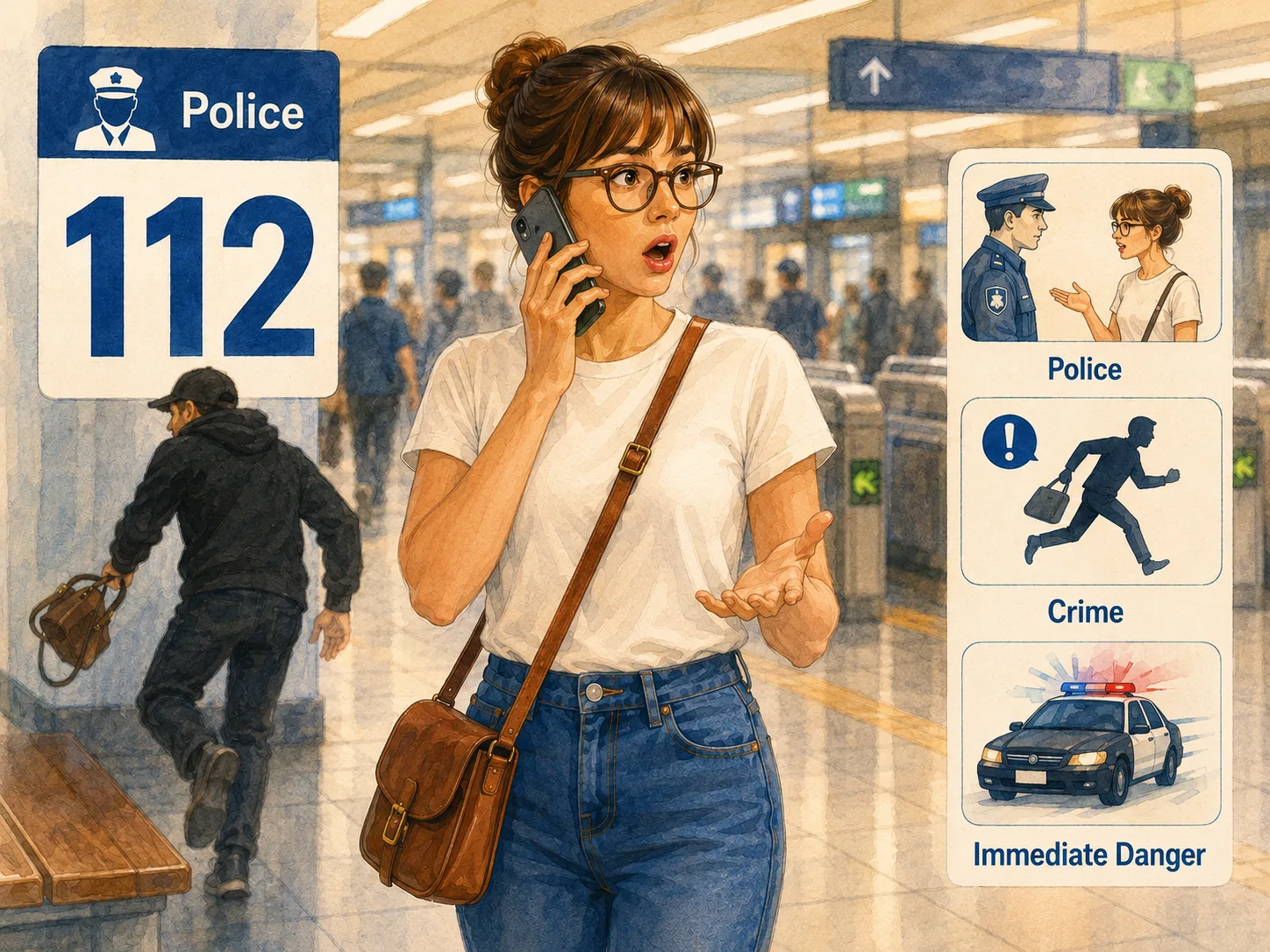
If Maya had seen someone run away with her bag, received a threat, or noticed someone following her, she should call 112.
In Korea, 112 is the police number for reporting crime. Use it when police need to respond quickly to situations such as assault, theft in progress, stalking, sexual violence, or unlawful entry. The Korean National Police Agency also distinguishes 112 for crime reports from 119 for fire, accidents, and rescue.
If you simply do not know where you left an item, first contact the place you visited or the transportation provider. If you need assistance as a traveler, you can also ask 1330 for help.
When the situation is unclear, as it was for Maya, keep your message short:
“My bag is missing.”
“I think someone took it.”
“I feel unsafe.”
When contacting the police, it matters not only what happened, but also when and where it occurred and which direction the other person went.
Korea’s 112 reporting system also confirms information such as the incident location, what occurred, and the direction in which a suspect fled, then relays it to officers in the field.
119 — When You Need Firefighters, Rescue, or an Ambulance
119 is not only for reporting fires.
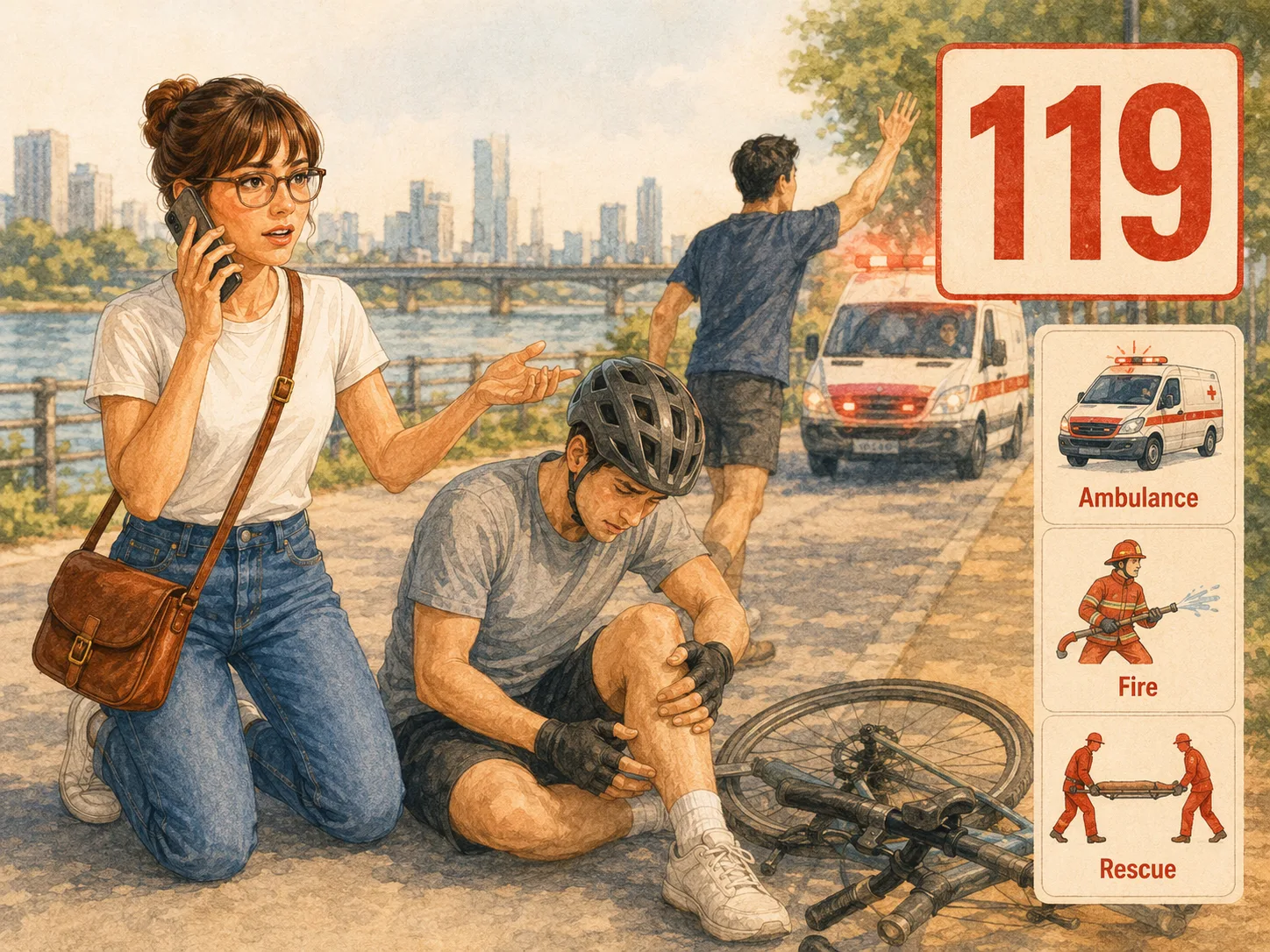
Call 119 if someone is unconscious, struggling to breathe, seriously injured, or needs an ambulance after a traffic accident. The number handles fires, rescue operations, and medical emergencies.
Examples include:
• Someone has collapsed and is not responding
• Someone is having difficulty breathing or a severe allergic reaction
• There is heavy bleeding or a serious injury
• There is a fire or smoke
• Someone needs rescue from an elevator, mountain, or waterside area
Imagine that Maya witnesses a bicycle accident at a Hangang park. From a safe location, she can call 119 and say:
“A cyclist is injured.”
“He is not responding.”
“We need an ambulance.”
While emergency responders are on the way, stay on the line and follow the operator’s instructions.
If someone else is nearby, having them go to the ambulance access route and guide responders to the location can also shorten the arrival time.
The National Fire Agency likewise recommends that someone other than the person providing first aid meet the ambulance and guide it in.
1330 — When You Need Tourist Information or Interpretation
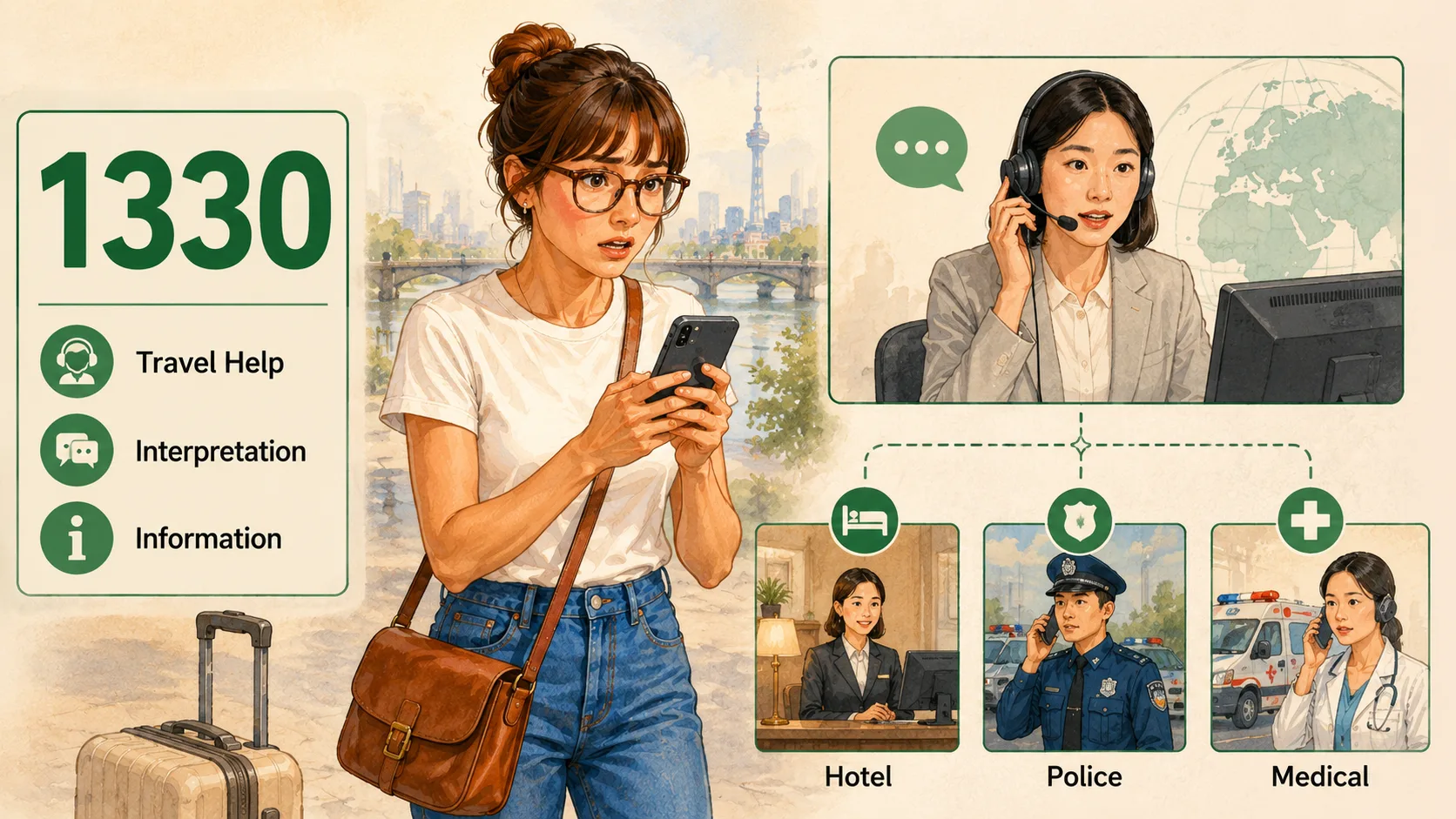
1330 is not a police or ambulance service. It is a travel-assistance line operated by the Korea Tourism Organization.
It provides information on attractions and transportation, assistance with accommodation and restaurant questions, tourist complaints, guidance for handling lost items, and tourism interpretation.
Call 1330 within Korea or +82-2-1330 from overseas. In addition to phone service, live chat and internet voice calls are available.
It is well suited to situations such as:
• You left something in a taxi
• You are having difficulty communicating with an accommodation provider or restaurant
• You want to find a nearby police station or hospital
• You experienced unfair treatment or inconvenience at a tourist site
• You want to confirm transportation options or operating hours
• You need interpretation assistance with a public agency such as 112 or 119
When necessary, 1330 may provide three-way interpretation with public agencies such as 112 or 119.
However, if someone is injured or there is an immediate risk of crime, do not contact 1330 first. Call 112 or 119 directly.
A February 2026 government policy notice states that 1330 operates daily from 7 a.m. to midnight. Some Seoul notices for special periods have announced 24-hour operation, so check the official 1330 information for the latest hours.
What If You Cannot Communicate Well in English?
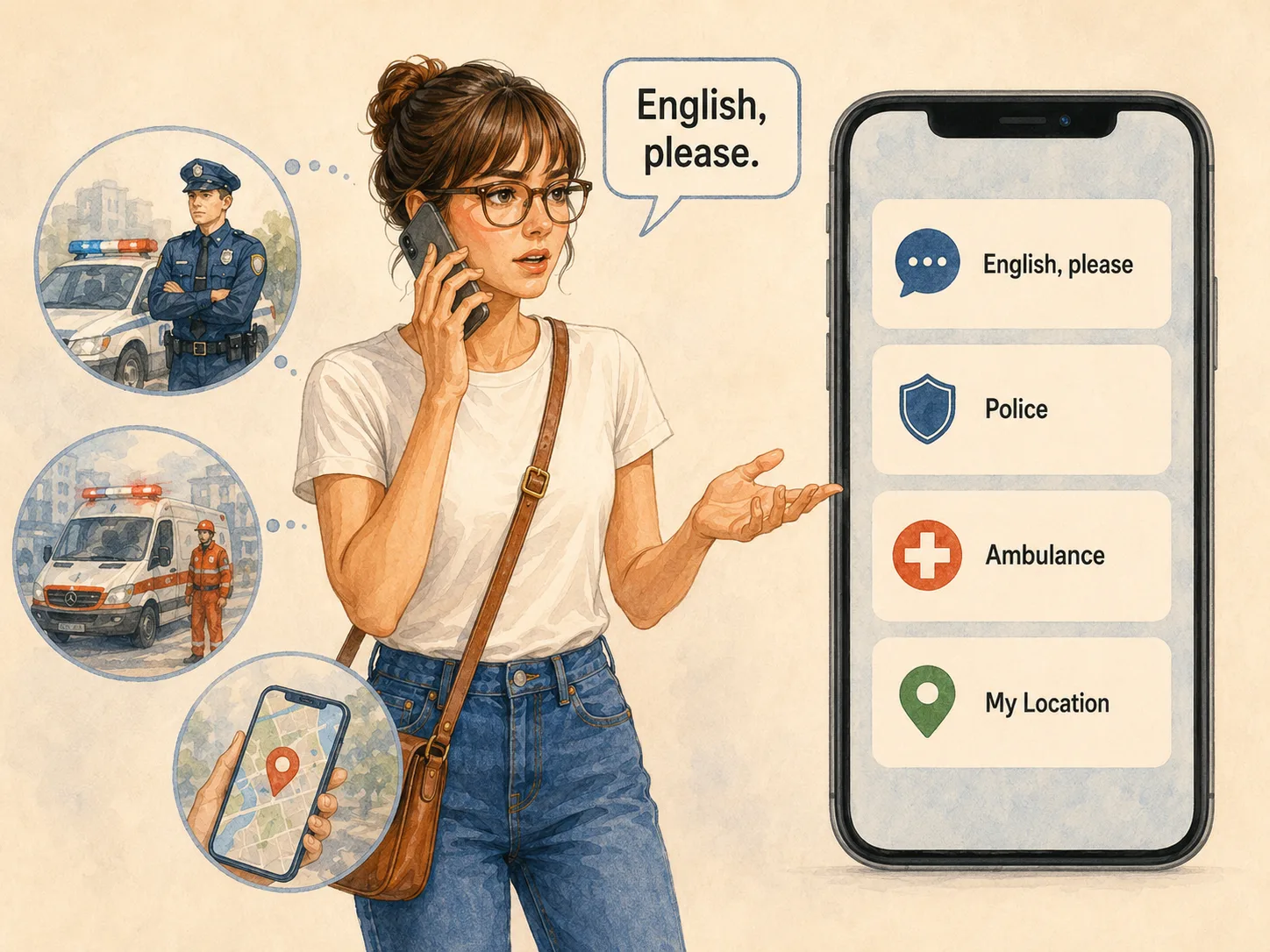
You do not need to form perfect sentences in an emergency.
Call the number first, then speak slowly.
“English, please.”
Next, give the most important information in a few words.
“Police, please.”
“Ambulance, please.”
“There is a fire.”
“Someone is following me.”
“I am injured.”
If you are struggling to speak, state the service you need, the immediate danger, and your location before attempting a long explanation.
If you need interpretation but are not in immediate danger, you can use 1330’s tourism interpretation service.
1330 offers tourist assistance in several languages, including English, and can connect callers with relevant agencies.

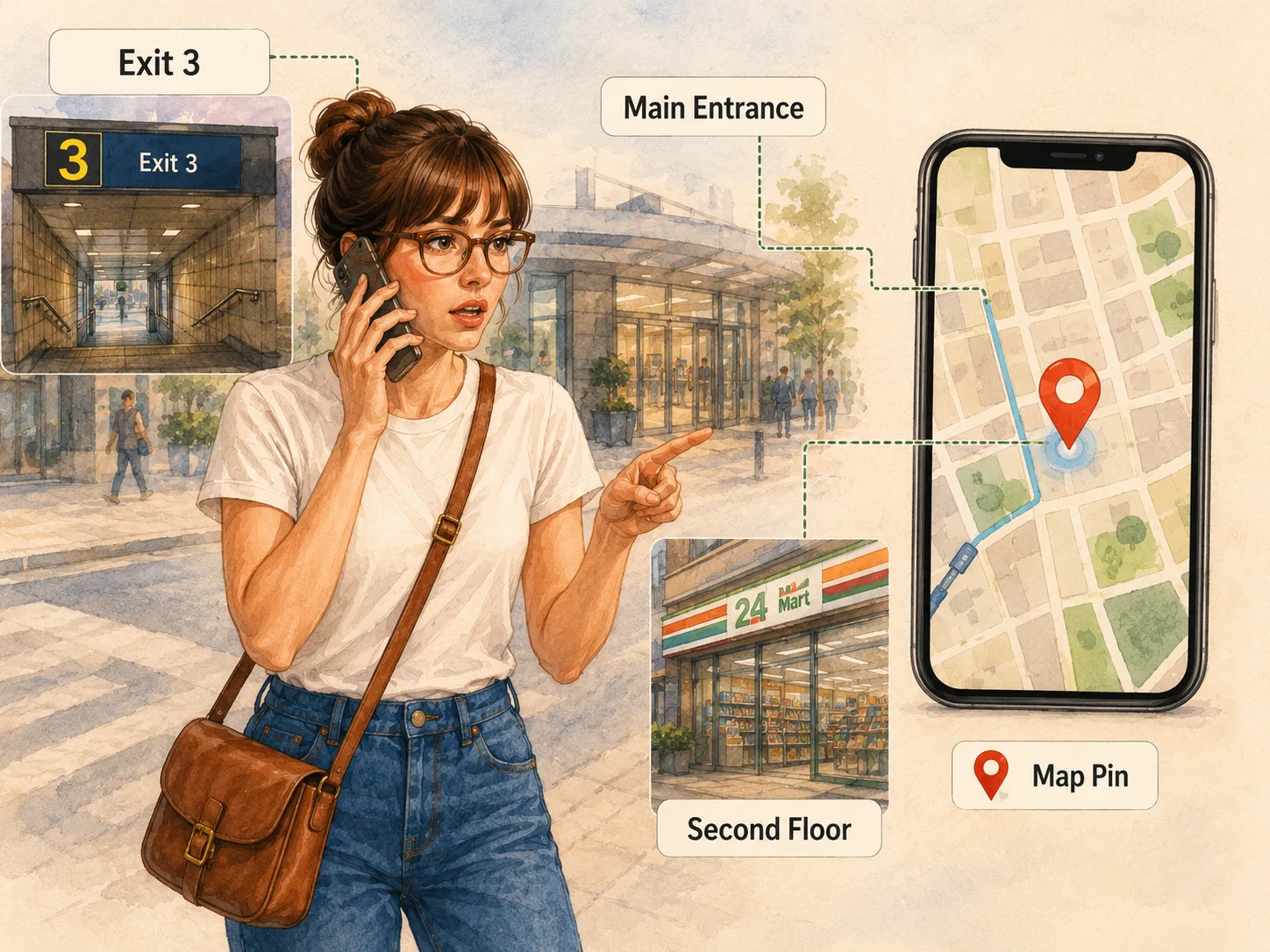
An Easy Way to Describe Your Location
Even if Maya says that her bag is missing, help is difficult to send without an accurate location.
In Korea, it is helpful to give your location in this order:
1. Building or place name
Name of the hotel, café, shopping mall, or attraction
2. Floor or entrance
Basement level 1, third floor, main entrance, or rear entrance
3. Subway station and exit
Nearest subway station and exit number
4. Nearby landmark
Convenience store, pharmacy, large sign, or intersection
5. Map pin or address
Street address or location pin shown in a map app
For example, you can say:
“I’m at Seoul Station, Exit 3.”
“I’m inside the café on the second floor.”
“I’m near the main entrance.”
On a walking trail, in a Hangang park, or on a mountain path, give the area name and the nearest restroom, convenience store, bridge, or stairway number.
If someone is nearby, you can also show them your location on your phone and ask for help.
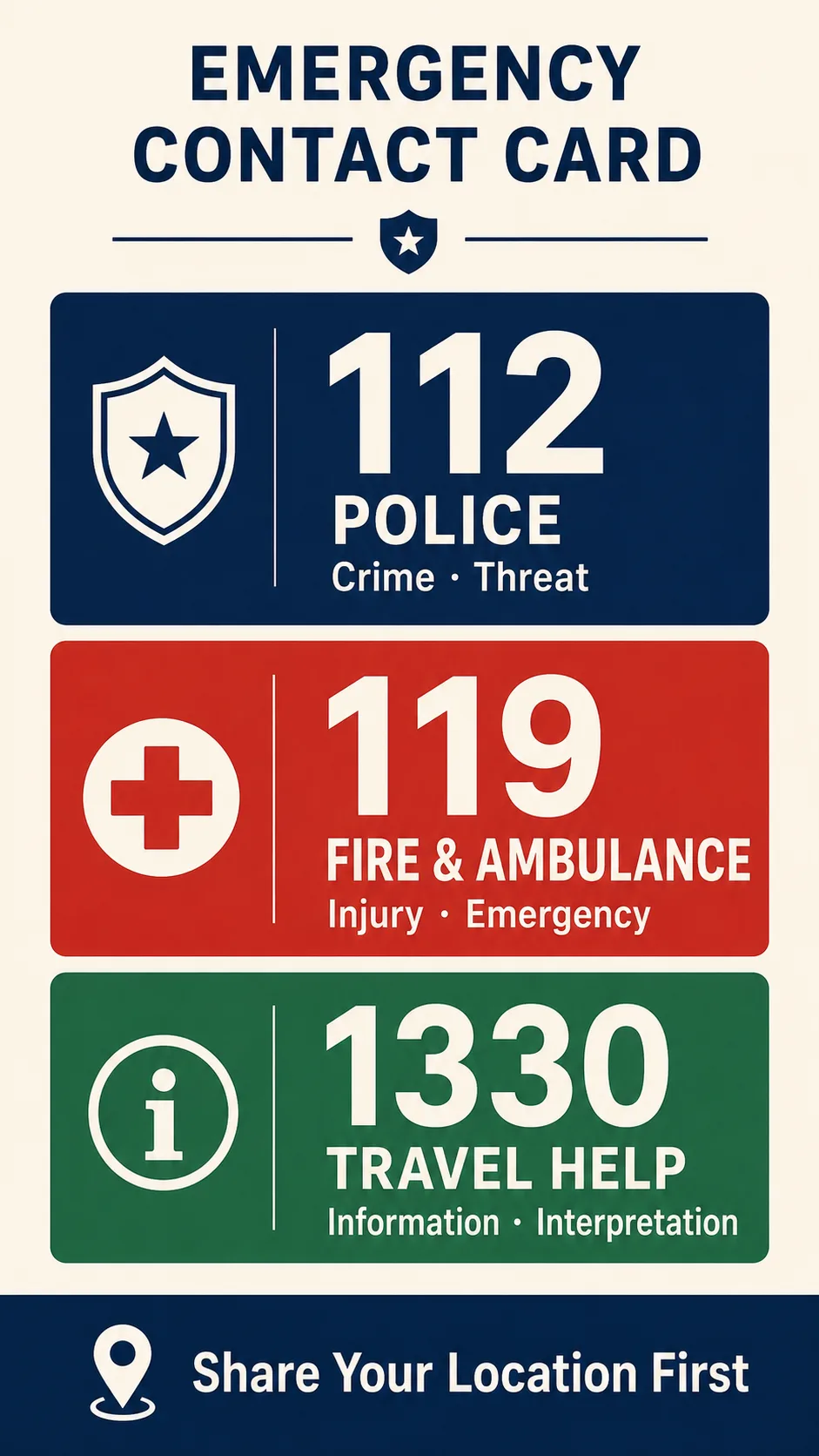
The Card Maya Saved on Her Phone
Once the situation was under control, Maya saved the three numbers to her contacts and added a simple card to her phone’s photo library.
SAVE THIS
112 — POLICE
Crime · Threat · Stalking · Theft
119 — FIRE & AMBULANCE
Fire · Injury · Medical Emergency · Rescue
1330 — TRAVEL HELP
Information · Interpretation · Tourist Complaint
Say your location first.
Building · Floor · Station Exit · Landmark
The experience taught Maya something.
Of course, the best outcome while traveling is for nothing to go wrong. But when something unexpected does happen, simply knowing what to do can make the situation feel far less frightening.
She still had not found her bag, but now she knew where to ask for help, how to make a police report, and which number to call if she needed an interpreter.
At first, the thought of being alone in an unfamiliar city had overwhelmed her. After receiving help, however, she felt a little calmer and less lost.
As Maya saved the emergency numbers on her phone, she thought:
‘I hope I never have to use these numbers again.’
Still, having them saved gave her peace of mind. If something similar happened again, she would know where to begin asking for help.
The emergency numbers worth remembering in Korea were simpler than she had expected:
• Call 112 for danger or to report a crime
• Call 119 for a medical emergency or fire
• Call 1330 for tourist information or interpretation
Maya learned that memorizing every number mattered less than calmly explaining her location and asking for the help she needed, even in a frightening moment.
That was when the unfamiliar city began to feel a little less unfamiliar.
Comments 0
Please log in to comment.
No comments yet. Start the conversation.