

What to Do Step by Step If You Lose Your Passport, Phone, or Wallet
Maya, who appears in this article, is a fictional character inspired by an American traveling in Korea.
Because the details may vary by country and card issuer, if this happens, follow the instructions of the police, your embassy, and your financial institution first.
As Maya left a café and headed toward the subway station, she noticed that a pocket on her bag was open.
Her passport wallet was gone. It had held her passport, credit cards, and some cash. When she realized her phone was missing too, her mind went blank for a moment.
Maya panicked and did not know what to do. After taking two deep breaths, she retraced what she had done earlier.
She spotted a nearby bench and table. She sat down and took a moment to think through the situation.
Find → Lock → Stop → Report → Embassy

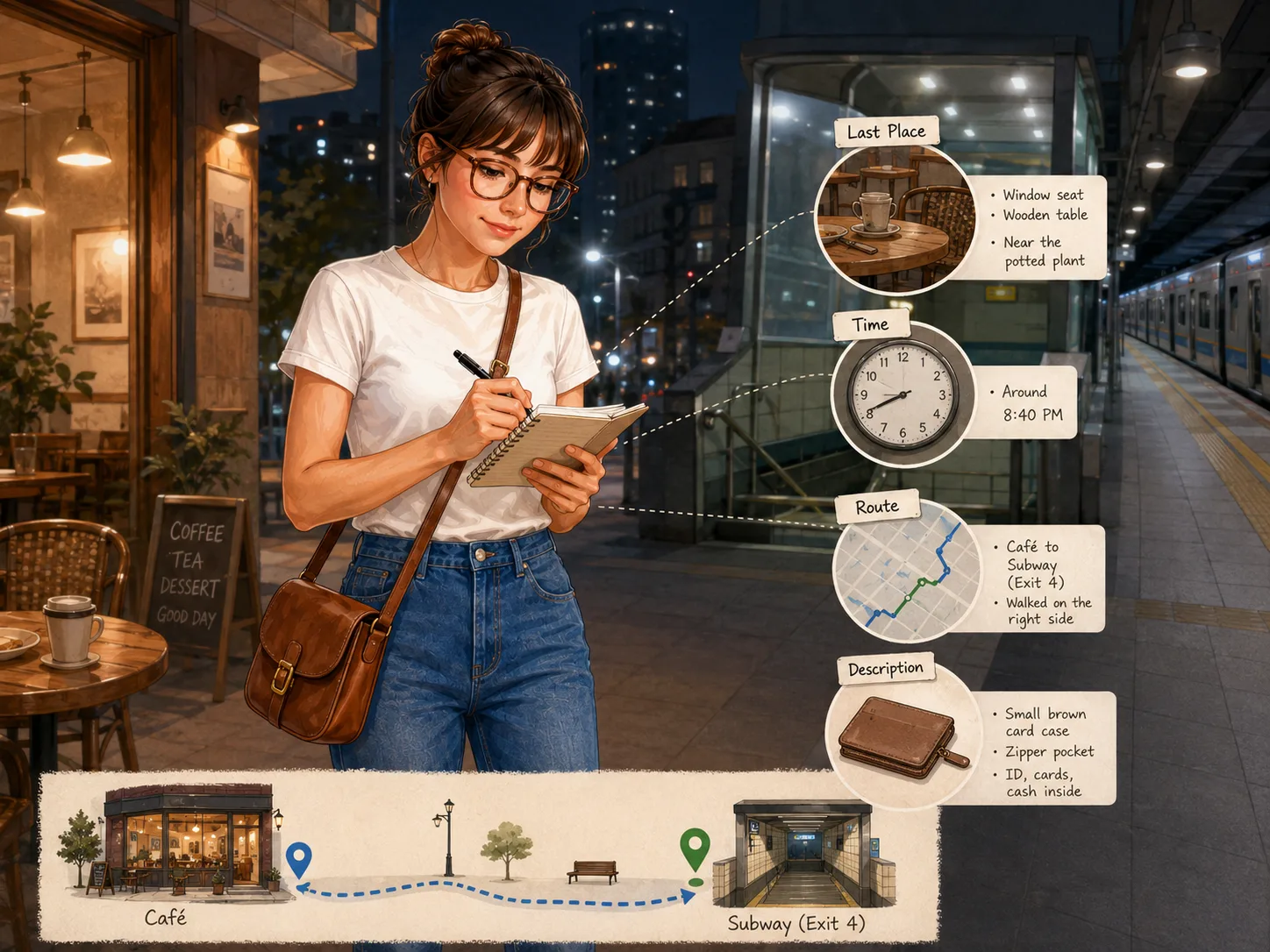
Step 1: Quickly check the last places you visited
Maya first wrote down when and where she had last used her card and phone.
• The time she paid at the café
• Where her table was located
• The subway station and line she used
• The color and identifying features of the missing items
If you think you left something at a café or restaurant, contact the business first.
If you lost something on the subway or a train, go to the nearest station office and provide the time of travel, the stations where you boarded and got off, and where you were seated or standing.
For items lost on a KORAIL train, contact a station office or the customer service center.
You can search for recovered items reported to the Korean National Police Agency through LOST112.
An item may be held by the organization that found it for a certain period before being transferred to the police lost-property system, so check again later even if it does not appear in a search that day. Travelers without a foreign resident registration number may face restrictions when filing a report online, so reporting the loss in person at a nearby police station is the more reliable option.
Step 2: Lock your phone before trying to retrieve it
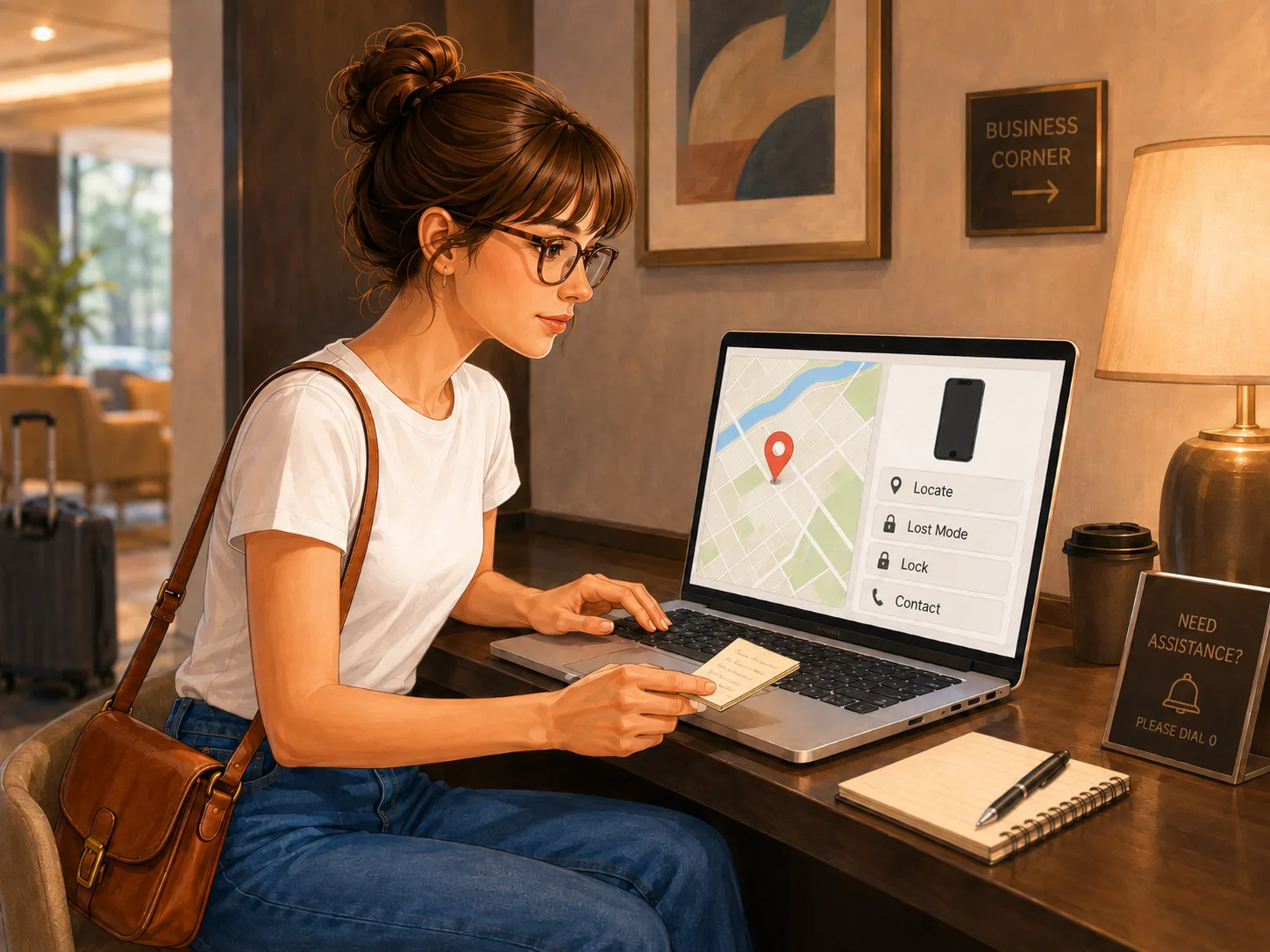
Maya borrowed a café employee’s phone to contact a friend, then checked her phone’s location from her laptop.
On an iPhone, turning on Lost Mode in Find My lets you lock the device and display a contact number and message on the Lock Screen.
On Android, Find Hub lets you locate the device, make it ring, lock it, or erase its data.
Even if the map shows an unfamiliar location, do not rush there alone. If you suspect theft or the device keeps moving, it is safer to give the police the location history and device information.
Maya first used Find My or Find Hub to lock her phone remotely.
Instead of displaying the number of the missing phone on the Lock Screen, she showed the contact information of a friend who had agreed in advance, along with a message asking the finder to get in touch.
Step 3: Freeze your credit cards immediately, even while you keep looking for your wallet
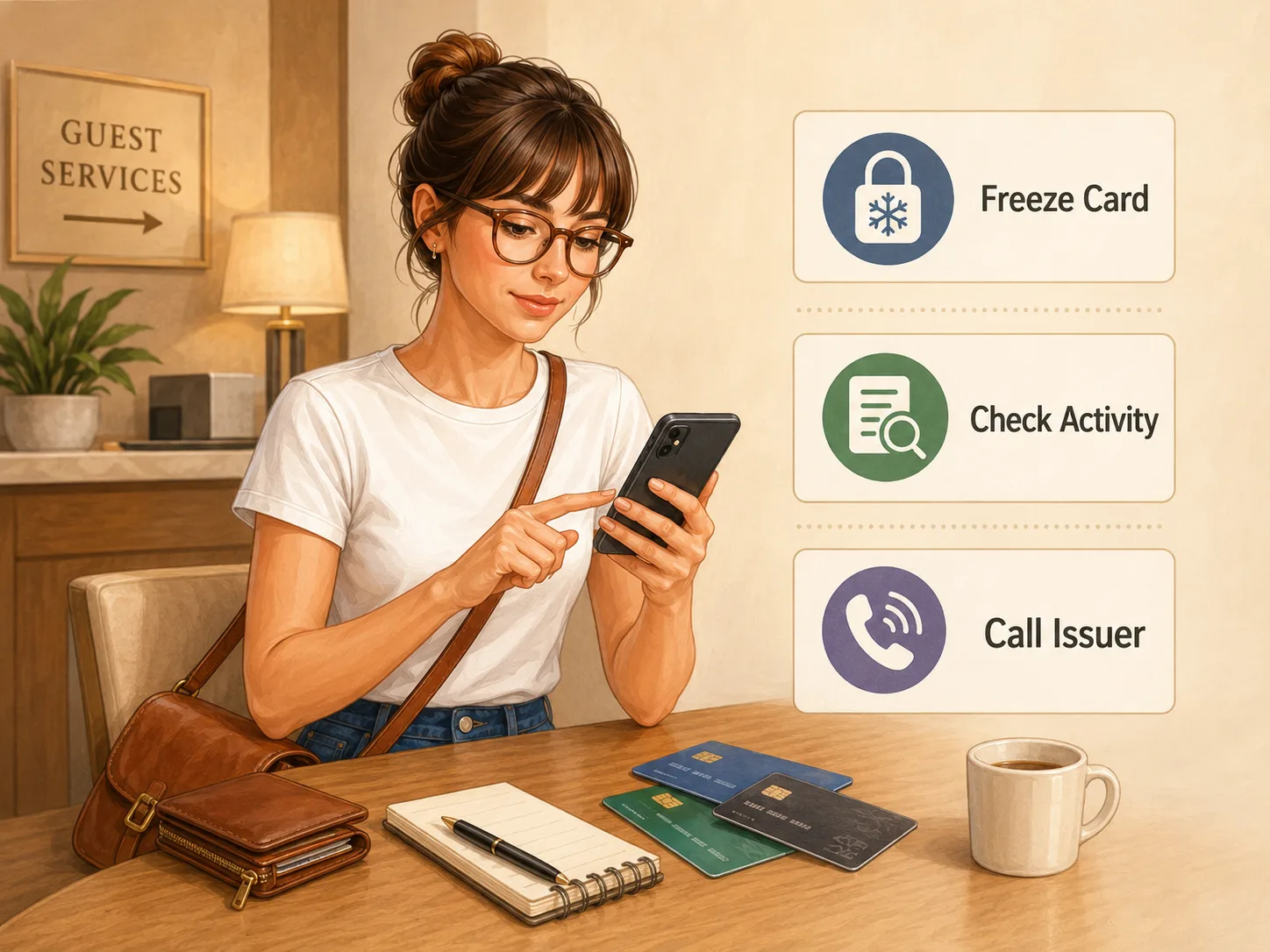
Even if you think you may recover the wallet, do not put off freezing the cards.
Maya signed in to her card issuer’s app and temporarily locked the cards she could manage there. For cards she could not access through the app, she called the issuer’s international lost-card number.
She also reviewed her recent transactions for any purchases she had not made.
For U.S.-issued credit cards, reporting the loss before the card is used means you are not liable for unauthorized charges. With debit cards, consumer liability may increase the longer you wait to report the loss, so it is important to notify the financial institution as soon as possible.
The actual protections depend on the issuer’s terms and the type of card.
Cash and transit cards may be difficult to recover, but freezing your credit cards can help prevent further losses.
Step 4: File a police report if your passport is missing or you suspect theft
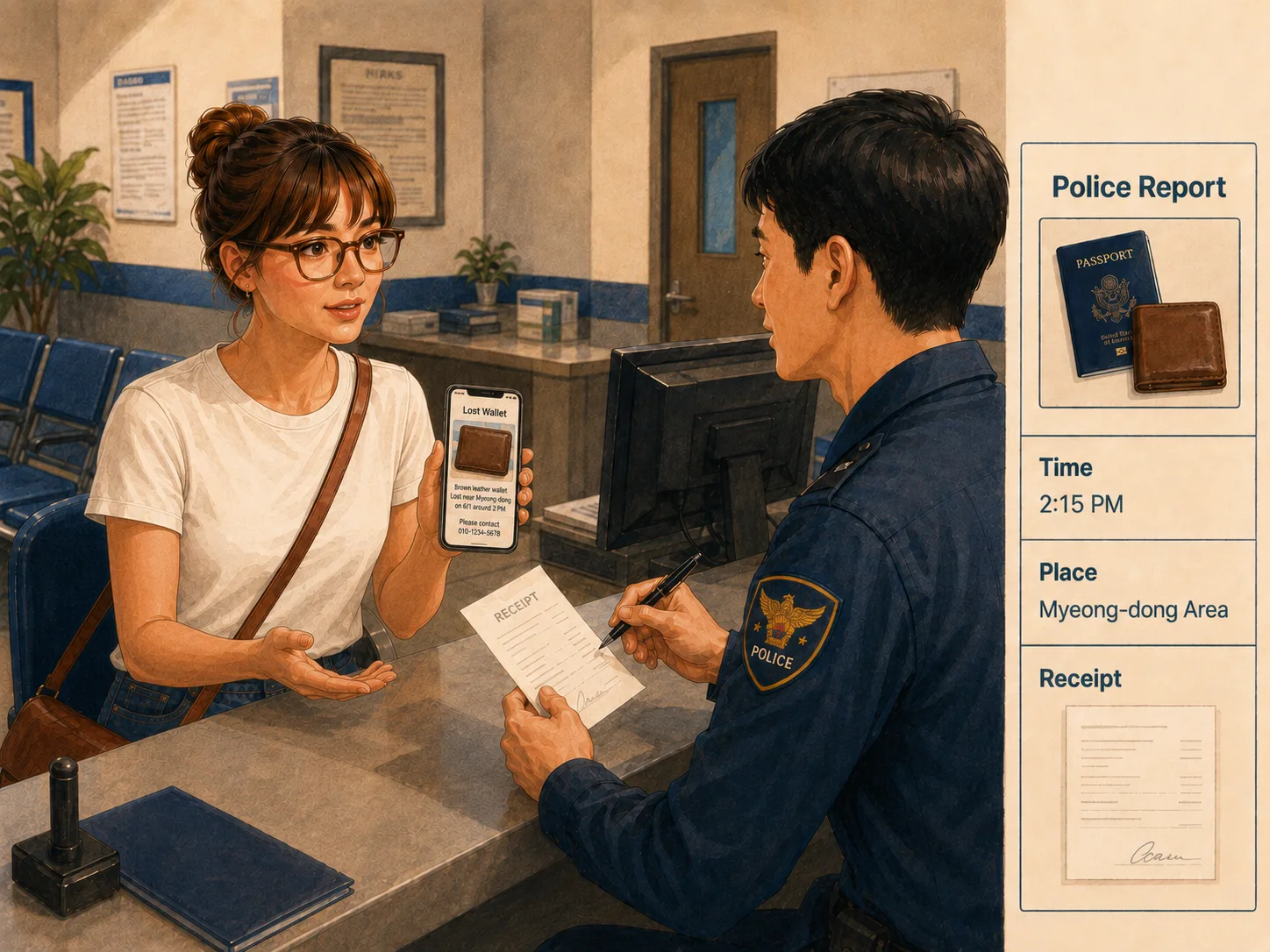
If you did not simply leave your belongings at a café—if theft is possible or your passport is also missing—visit the nearest police station or police substation.
When filing a report, describe in detail where and when the items went missing and what they look like, and ask for a copy or receipt confirming the report.
This document may help when replacing your passport at the embassy or reporting the incident to a travel insurer or financial institution.
Although it is not always required to replace a U.S. passport, it can serve as documentation explaining how the passport was lost or stolen.
If a crime is in progress or you are in immediate danger, call the police emergency number 112.
For general lost-property inquiries and information about LOST112, call the police information number 182or visit a nearby police station.
If you need travel interpretation or guidance to the appropriate agency, you can also call 1330for assistance.
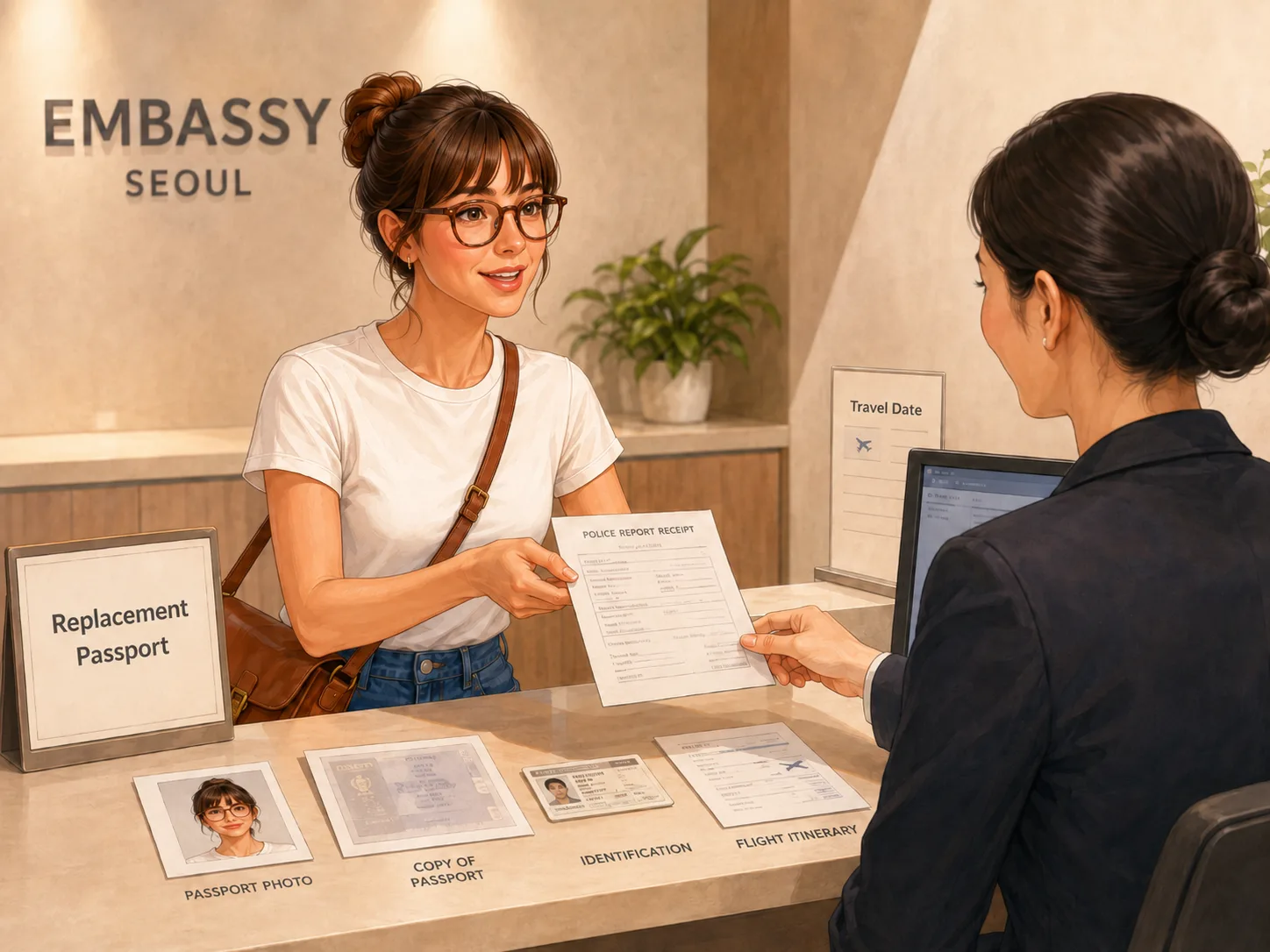
Step 5: Replace your passport through your embassy
If you lose your passport, contact your embassy
Because Maya was American, she first checked the passport guidance from the U.S. Embassy in Korea.
If a U.S. passport is lost overseas, you must visit an embassy or consulate in person to obtain a new one.
If your departure date is approaching, explain your itinerary and current circumstances and ask whether an emergency appointment or a limited-validity emergency passport may be available.
If possible, bring a passport photo, identification, evidence of U.S. citizenship, and your airline ticket or travel itinerary.
But do not give up on the process just because you cannot gather every document.
A consular officer may guide you through other ways to verify your identity.
At first, Maya was worried by the number of documents that seemed to be required.
“How am I supposed to prove who I am without my passport?”
But after reading the guidance carefully, she realized that the most important thing was to contact the embassy and explain the situation, even if she did not have every supporting document ready.
There was one more important point: once a U.S. passport is reported lost or stolen and canceled, it cannot be used for international travel even if it is later found.
Maya decided that if the passport was only temporarily out of sight inside her bag, she should quickly check the area, her accommodation, and the lost-and-found offices of places she had visited. But if she was certain it was truly lost or stolen, she needed to report it immediately.
“Reporting it quickly matters, but first I should calmly make sure it really is missing.”
Travelers who are not U.S. citizens should contact the embassy or consulate of their country to ask about an emergency travel document or a replacement passport.
Required documents and procedures vary by country, so following the official guidance from your embassy is safer than relying on general information online.

Maya’s practical order of action
A few hours later, Maya was relieved to hear that her phone was being held at a subway lost-and-found center.
Her wallet had not been found, but because she froze her cards early, there were no additional losses.
“I’m so relieved they found at least my phone.”
She was disappointed that her passport was never found. The embassy visit and paperwork felt daunting, but Maya decided to work through the replacement process calmly so she could return home safely.
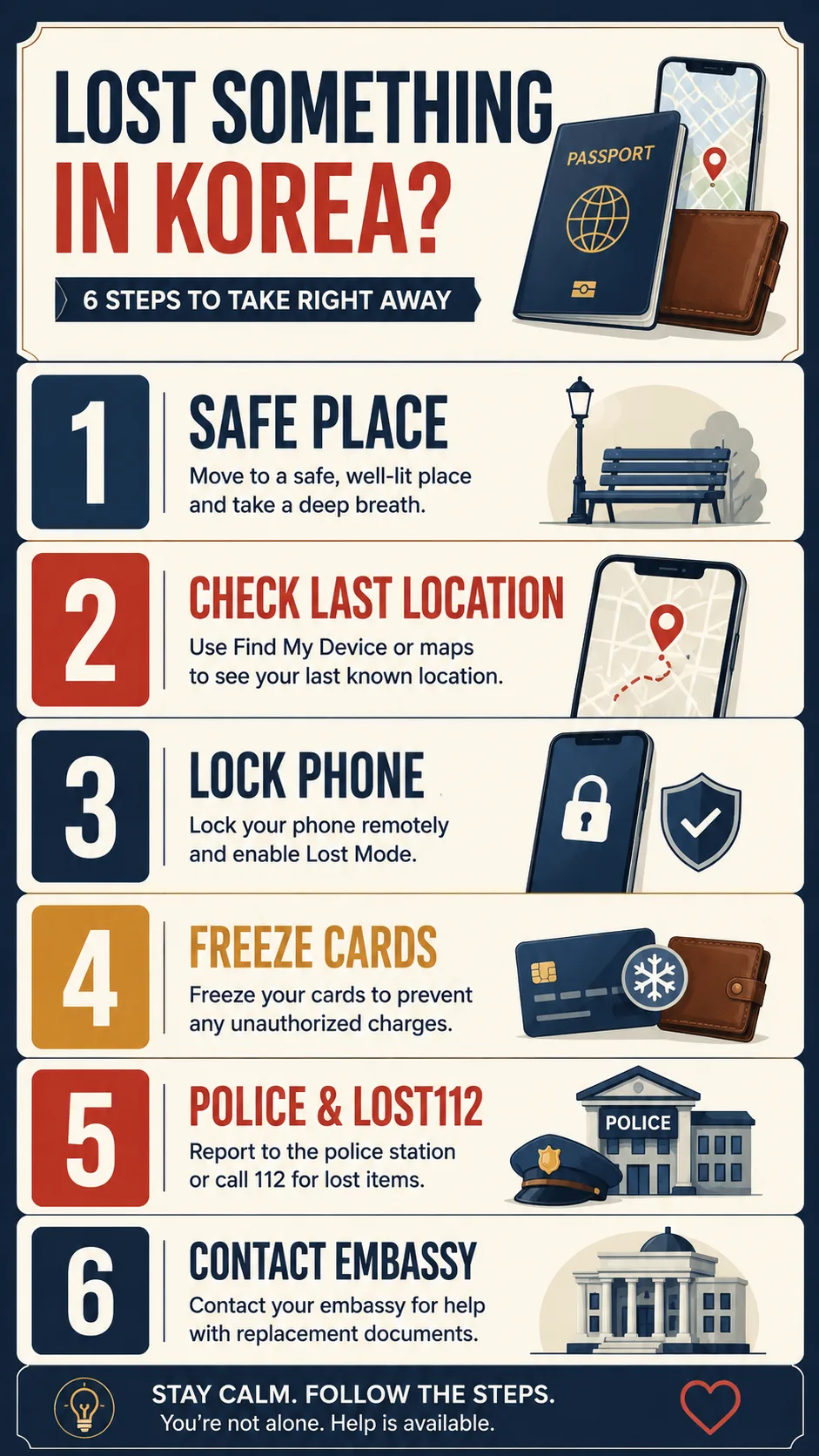
Maya saved the following response plan in the notes app on her phone.
1. Move to a safe place where other people are present
2. Ask the last places you visited and the transportation operator you used about lost property
3. Locate your phone and lock it remotely
4. Freeze missing cards and review your transactions
5. Search LOST112 for recovered items and file a police report if needed
6. If your passport is missing, contact your country’s embassy or consulate
The hardest part of losing something is that panic can make it difficult to decide what to do first.
Handling each step in order can help protect your personal information, limit financial losses, and minimize disruption to the rest of your trip—even if not every item is recovered.
Comments 0
Please log in to comment.
No comments yet. Start the conversation.